How Might We Help Students See Formative Practice as the Foundation for Learning?
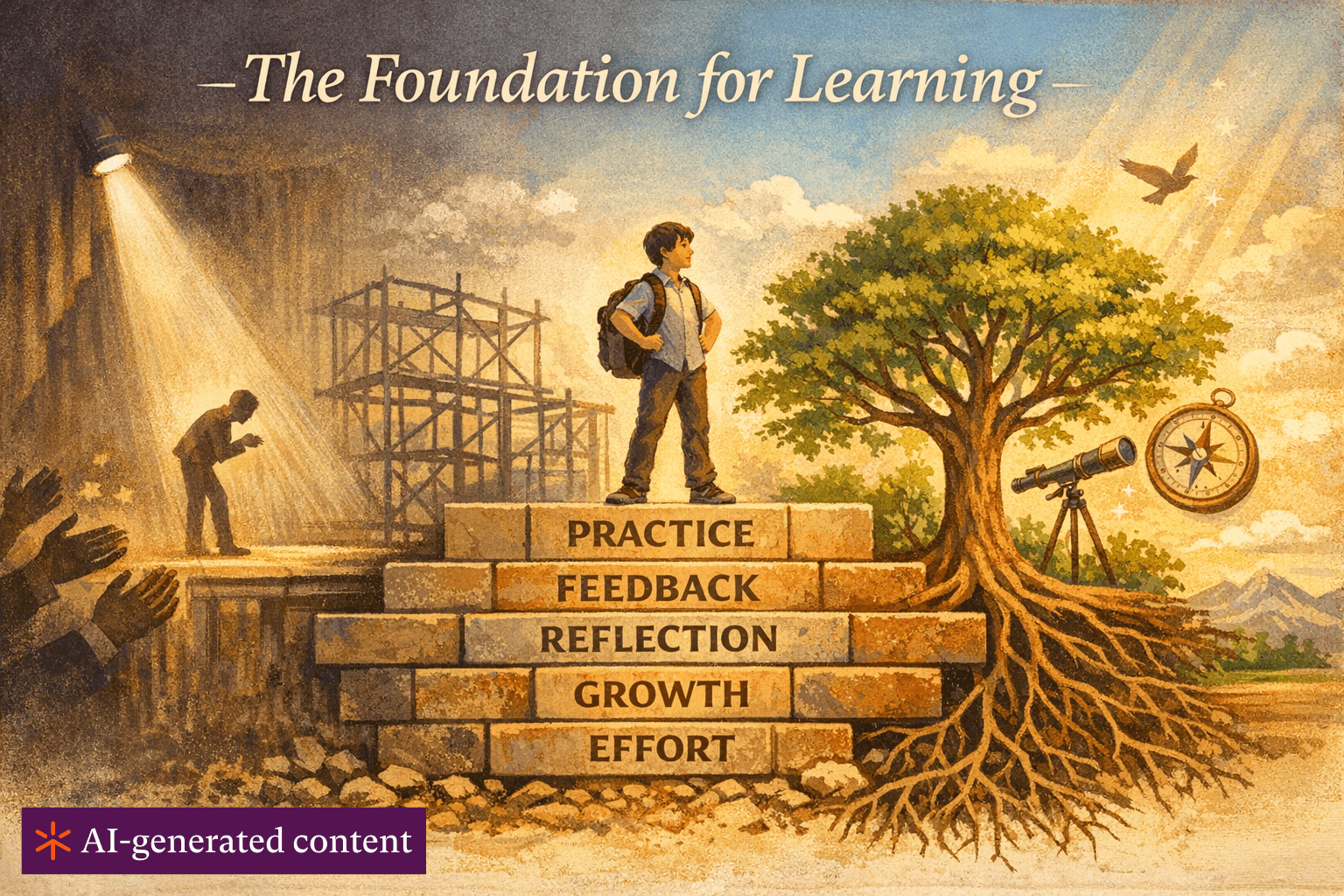
There’s a question that has bothered me throughout my time as a teacher: Why do so many of our students believe that only graded work matters? They walk into class asking not “What will I learn?” but “Will this be graded?” This mindset—that learning is something that happens only when points are at stake—represents a fundamental misunderstanding of how growth actually works. When I joined Cohort 21, I knew I had to tackle this head-on. My driving question became: How might we help students see formative practice as the foundation for learning?
This question wasn’t academic for me. It was personal. I’ve watched brilliant students ignore practice work, skip reflection and revision opportunities, and avoid the chance to struggle productively because they couldn’t see the connection between effort and growth. I’ve also seen students paralyzed by the fear of grades, unable to take the intellectual risks that real learning requires. However, I’ve witnessed the moment when a student finally gets it. When students realize that the practice, the feedback, the reflection and revision cycle is where the magic happens. That moment became my focus for this work.
What I Did & Its Impact
Changing a student’s fundamental belief about learning isn’t something that can be accomplished with a single activity or intervention. It requires consistency, visibility, and regular celebration. Here’s what happened in my classroom.
The Disengaged Student Who Learned to Self-Regulate
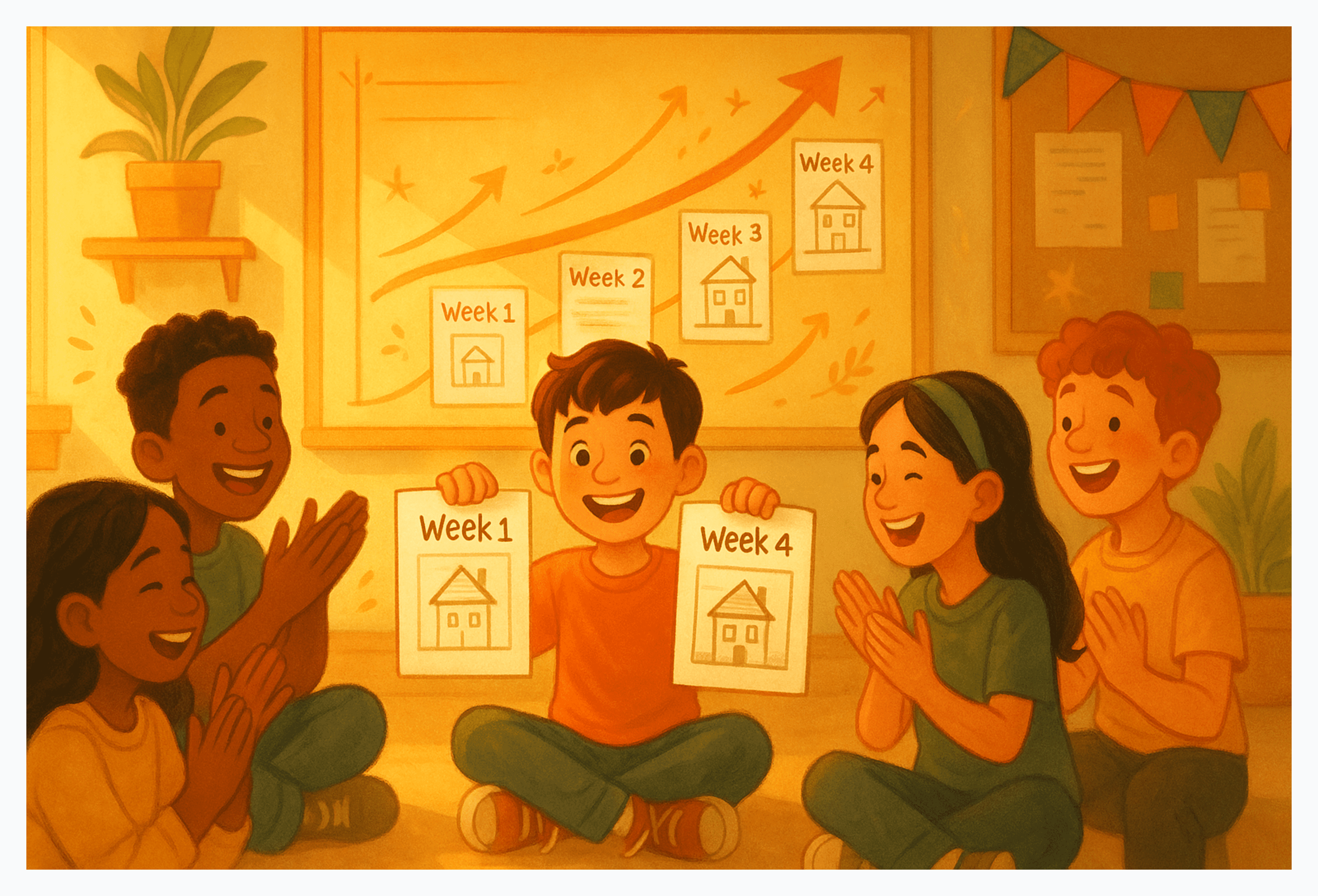
I had a student, let’s call him Milton, who believed the “only grades matter” mentality. He was disengaged, dismissive of formative feedback, and convinced that practice work was busywork. But something shifted when I started making his growth visible to him in real time. Instead of just marking his work, I created a simple before and after comparison system where Milton could see his own growth over time. He started noticing patterns, asking questions, and most importantly, applying self-regulation strategies without being prompted.
What amazed me most was watching him transfer these skills outside the classroom. His teachers began reporting that Milton was asking for feedback in other classes, revising his work voluntarily, and talking about his learning process with peers. He had internalized the idea that practice leads to mastery.
Building a Culture of Peer Recognition and Celebration
I realized early on that celebration couldn’t be left to chance. So I built it into the rhythm of our classroom. We started a “Student of the Week” spotlight where the focus wasn’t on who had the highest grade, but on who demonstrated growth, resilience, or a positive mindset. For example, we celebrated the student who finally understood a concept they had struggled with for weeks. We recognized the peer who asked a clarifying question that helped the whole class. We highlighted the student who revised their work three times because they wanted to understand it better.
This shift in what we celebrated changed everything. Students started seeking out these recognitions not only because they wanted external validation (though that’s normal for humans), but because being seen as a learner mattered to them. Peer recognition became more powerful than any grade. I watched students nominate each other for growth, which created a cycle of accountability that was entirely organic. They were holding each other to a standard of learning, not a standard of performance.
The Question That Changed Everything
One moment crystallized the entire shift for me. Instead of “Will this be graded?” he was asking whether the practice could serve as evidence of his growth. The question itself revealed the mindset toward learning that I had been seeking. This student wasn’t thinking about points anymore. He was thinking about seeing himself improve, which became a model for others.
Now in my classroom, instead of asking questions like “Why do we have to do this?” they ask “What should I focus on first?” The conversation has shifted from grades to growth, from performance to process, from individual achievement to collective learning.
This didn’t happen overnight. It required consistent communication about what I valued, repeated celebration of growth over grades, and a willingness to make the learning process visible at every step. But once students began to see themselves as learners engaged in a process of continuous improvement, the question of grading became almost irrelevant to their motivation.
What I Learned
This journey has taught me things that I hope to carry with me for the rest of my career. And they’re not what I expected when I started.
Students Want to See Themselves as Learners
This is the foundational insight. Students don’t automatically believe they’re learners. In many ways, they’ve been conditioned to see themselves as performers; people who either succeed or fail based on their performance. However, when students find themselves in conditions where they can see themselves improving, where their growth is named and celebrated, they begin to internalize the identity of “learner.” And once they see themselves that way, they begin to act that way.
This means that the work isn’t really about changing behaviour. It’s about changing identity. When students believe they are learners, they naturally engage in learning behaviours. They ask questions. They seek feedback. They reflect. They revise. They persist through difficulty. These aren’t things you have to force or incentivize. They flow naturally from the identity shift.
Students Need to Understand the Effort-Success Connection
I’ve learned that students don’t automatically connect their effort to their success. Many believe that success is either something you have (talent) or you don’t. However, what they need is explicit and repeated evidence that effort, strategy, and practice actually produce results. This is why the before-and-after comparison is so powerful. It makes the causal relationship undeniable. In the case of Milton, he didn’t just hear me say “effort matters.” He saw it in his own work. He could point to the specific practices that led to improvement.
This means feedback has to be about more than correction. It has to show the path from effort to growth. It has to help students see that when they try a new strategy, when they revise based on feedback, when they practice deliberately, they improve. And that improvement is real, measurable, and worth celebrating.
Students Want to Be Celebrated for Growth, Not Grades
This might sound confusing in a system obsessed with grades, but I’ve watched students’ faces light up when they’re recognized for growth in a way they never do for a high grade. A student who gets an A but hasn’t grown much often looks unmoved. But a student who started struggling and now shows real improvement? They shine. They tell their families. And they bring it up weeks later.
The reason is simple: growth is evidence that you’re a learner. A grade is just a number. Growth shows you that effort works, that persistence pays off, that you’re capable of improvement. That’s what students actually want to feel. That’s what builds confidence and motivation over time. Once I understood this, I stopped worrying about whether students were motivated by grades and started focusing on making growth visible and celebrated.
Communication and Consistency Are Non-Negotiable
None of this would have worked if I hadn’t made an effort about communicating what I valued and consistently celebrating it. I couldn’t just mention growth once and expect it to stick. I had to weave it into every conversation, every feedback comment, every classroom moment. The “Student of the Week” spotlight had to happen every single week, not just when I remembered. The before-and-after comparisons had to be a regular part of the routine, not a one-time activity.
What I learned is that students believe what you consistently celebrate. If you say growth matters but only celebrate high grades, students will know what actually matters. If you say effort is important but never acknowledge it, students will know you don’t mean it. But if you consistently, visibly, repeatedly celebrate growth and the learning process, students will eventually internalize that as what is truly valued in your classroom.
Conclusion
This realization has changed how I approach everything in my classroom, from how I design assignments to how I communicate with families to how I structure our time together. And I believe it’s scalable. It’s not dependent on a particular subject or grade level. It’s about fundamentally shifting what we value and making that value visible every single day.