Book Review: Between Fixed & Fickle (A.Dahl)
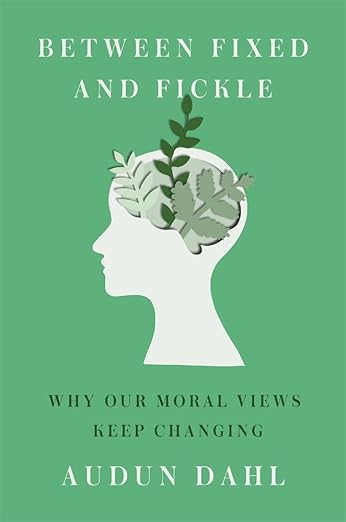
“Why didn’t people all along see the obvious moral truths—and how could today’s young generation be blind to them anew?” (p.170)
As leaders, we are tasked with moral decisions daily—decisions on inclusion, fairness, and evolving cultural norms. Audun Dahl’s Between Fixed and Fickle reminds us that what seems like moral certainty today was often debated yesterday. This book is essential reading for leaders who want to understand not just the what of moral change, but the why.
You would be interested in this book if…
You’re a leader navigating ethical dilemmas, especially in fast-changing contexts.
You’ve ever wondered why generations differ so widely on moral issues, or if you want to lead with empathy through these shifts
You were intrigued by Kurt Gray’s “Outraged!” and want to deep dive into moral psychology a bit further, with research and practical applications.
Why Leaders Must Embrace Moral Reversals
History is full of moral reversals, from slavery to civil rights. Dahl asks us, as leaders, to be aware that today’s norms may shift. On page 170, he poses the key question: why didn’t people see moral truths earlier? This question is vital. As leaders, we must stay open to future moral expansions—on equity, diversity, or even technology use. We are not just decision-makers; we are moral shepherds of future generations.
Cheating, Integrity, and the Leader’s Role
Dahl’s exploration of cheating (p.71) reveals a crucial leadership insight: we must foster integrity not through fear of punishment but by explaining why integrity matters. Leaders create ethical cultures by contextualizing moral choices. In a world of AI and rapid change, we must help our teams see beyond immediate pressures—to the deeper values that sustain trust in our organizations.
Emotions and Reason: A Leader’s Balancing Act
On page 108, Dahl highlights that reason and emotion are inseparable. This is essential for leaders. We can’t expect purely rational choices from ourselves or others. Understanding that moral decisions blend both helps us lead with compassion—recognizing the emotions that accompany change and the reason that justifies it.
Trolleyology and the Leader’s Dilemma

Dahl’s exploration of trolleyology (p.24) mirrors the leader’s challenge: we often must choose between imperfect options. By understanding why moral views shift, we equip ourselves to navigate dilemmas that seem impossible. Leaders must see nuance, not moral absolutes.
Final Thoughts
Dahl’s work is a call to moral humility. As leaders, we must hold space for evolving truths while guiding our communities with empathy. The moral questions we face today will look different tomorrow. This book doesn’t give easy answers—but it offers leaders the questions we need to ask to stay on the right side of history.
I was honoured to be asked to read this book and provide a review from Audun Dahl’s publisher.