
Teaching Down: How Mentoring Younger Students Transformed Formative Learning Into Purpose
After successfully including peer celebrations to help students see the value in formative practice, I discovered something even more powerful: students need to see their own growth; but they also need to use it to help others grow.
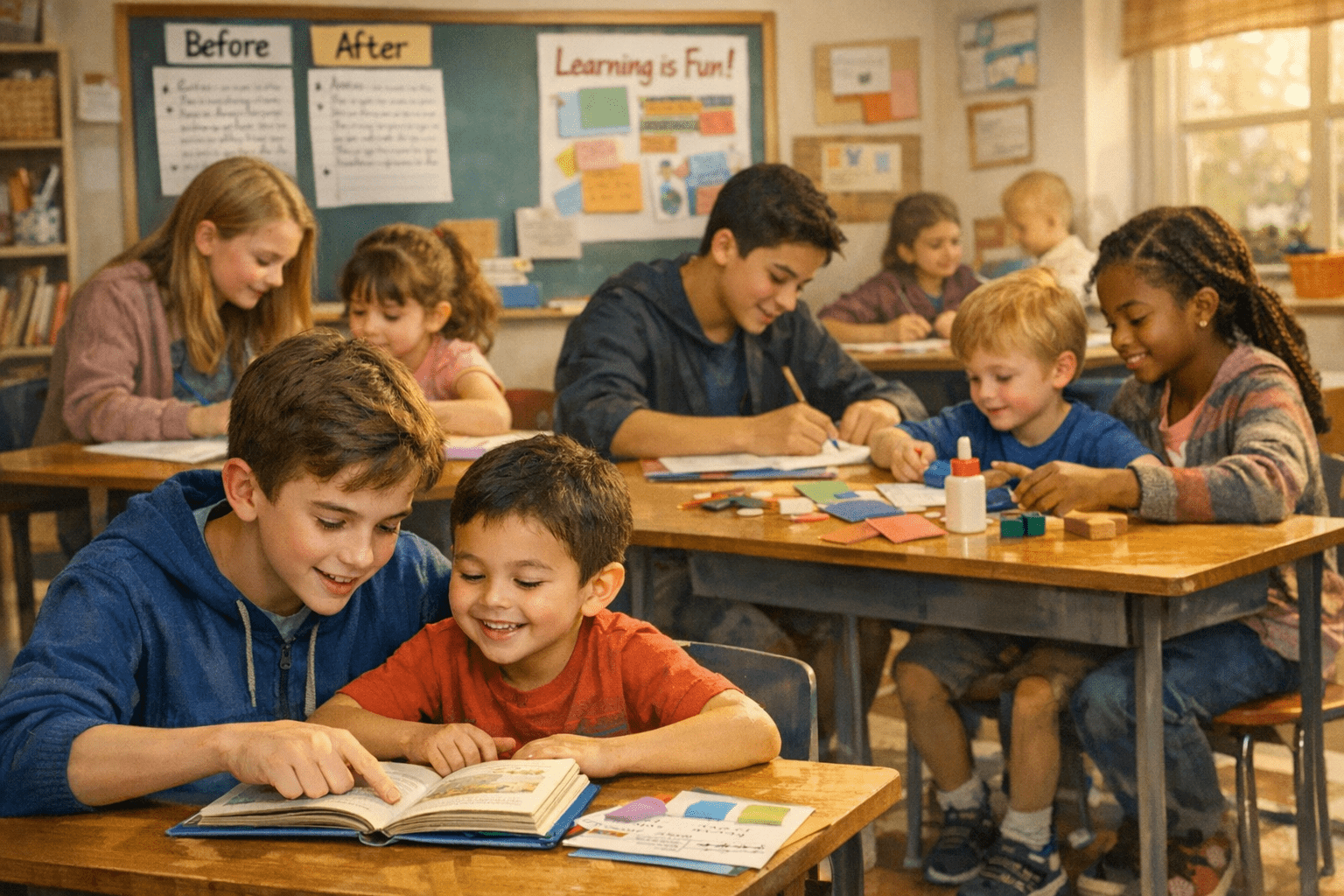
This realization came through a program at my school called Horizons, where my Year 9 Academic Foundations students became “buddies” to Grade 3 and 4 students from underprivileged public schools. What started as community service became an opportunity for formative learning, self-assessment, and the real-world application of their learning skills.
The Challenge: Initial Resistance
When the Horizons program was first introduced to my Year 9 students, their immediate response was filled with skepticism. “Why do we have to do this?” “How is this going to help us?” “Isn’t this just babysitting?”
They didn’t see any connection between their learning skills and teaching younger students. They didn’t understand that the very skills they’d been practicing in their formative work, such as breaking down concepts, explaining ideas clearly, adapting to different learners, and self-correcting, were exactly what they needed to be effective mentors.
So we had a conversation. I asked my students: “What do you think it takes to teach someone else how to read? How to write? How to do a craft?” The answers came slowly at first, then with growing clarity: “You have to know it really well yourself.” “You have to explain it in a way they understand.” “You have to be patient and encouraging.”
Then I connected the dots: “That’s exactly what formative learning is. It’s the practice, the feedback, the self-correction. When you’re teaching your buddy, you’re using all of those skills. And you’re going to see, in real time, if your teaching is working. That’s the most powerful feedback you can get.”
Over time, the Horizons program wasn’t viewed as babysitting anymore, but as an authentic application of learning skills to serve someone else’s growth.
The Transformation: What My Students Discovered
One student told me: “I realized that when I was teaching my buddy to write, I had to think about all the steps I take when I write. I never really thought about that before. Now I understand why we do all those writing drafts. It’s because writing is a process, and more than just getting it right the first time.”
My students also started monitoring their own teaching in real time. “Wait, my buddy didn’t understand that explanation. Let me try again.” “That craft activity was too hard. Next time I’ll break it into smaller steps.” “My buddy loved that story. I should find more books like that.”
They were doing exactly what we ask students to do in formative learning: notice what’s working, adjust, try again. But now they were doing it because their buddy’s learning depended on it.
Why Teaching Down Works for Formative Learning
I’ve been thinking about why this strategy is so powerful, and I think it comes down to three things:
- Authenticity
Formative learning often feels abstract to students. “Why do I need to revise this draft?” “Why do I need to practice this skill?” But when you’re teaching someone else, the reason becomes more clear. Your buddy needs you to know this well. Your buddy needs you to explain it clearly. Your buddy’s growth depends on your learning.
- Visibility of Impact
In traditional formative learning, students might not see the connection between their practice and their summative performance until weeks or months later. But when you’re teaching a younger student, you see the impact immediately. Your buddy learns to read better because you practiced reading aloud. Your buddy writes better because you modeled the writing process. The cause and effect is undeniable.
- Responsibility and Ownership
When formative learning is just for you, it’s easy to coast. But when someone else is counting on you, you show up differently. My Year 9 students took their role as mentors seriously. They wanted to be good at it. They wanted their buddies to learn. That responsibility transformed how they approached their own learning skills.
Connecting the Dots
I started this journey with peer celebrations—making formative growth visible and valued within the classroom. But ‘teaching down’ took it further. It showed students that their learning skills weren’t just for their own success. They were tools for helping others.
The progression went from “I can see my own growth, and my peers celebrate it,” to “I can use my learning skills to help someone else grow.”
This is the real goal of formative learning. Not compliance. Not grades. But the development of learners who understand that practice, feedback, and growth are lifelong, and that those processes are most meaningful when they’re in service of something bigger than ourselves.
An Invitation to Other Educators
If you’re working on shifting student mindsets about formative learning, I want to challenge you with this: Don’t just make formative learning visible. Make it purposeful.
Find ways for your students to use their learning skills in service of others. Whether that’s peer tutoring, mentoring younger students, teaching a community skill, or creating resources for others to learn from, the key is connecting practice to purpose.
Victor, I appreciate your commitment to ensuring that students understand that learning is not just about the benefit it brings to ourselves. We are all part of something bigger!