Book Review: War for Kindness (Jamil Zaki)
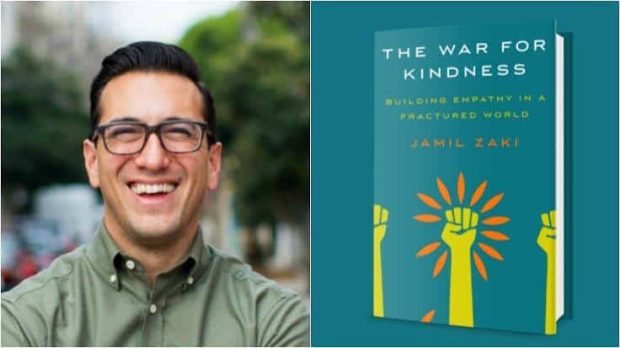
“Organizations that emphasize kindness flourish. Even when it comes to the bottom line… We are not merely individuals fighting to empathize in a world of cruelty. We are also communities, families, companies, teams, towns and nations that can build kindness into our culture, turning it into people’s first option. We don’t just respond to norms, we create them.” (p. 122)
What if kindness were one of the most powerful strategies available to leaders? And what if empathy, rather than being an innate characteristic that some possess and others lack, were a skill that we could deliberately develop?
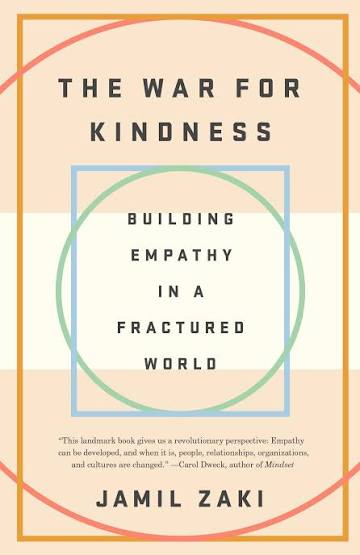
These are the questions that stayed with me throughout Jamil Zaki’s remarkable book, The War for Kindness: Building Empathy in a Fractured World.
Zaki, a professor of psychology at Stanford University and director of the Stanford Social Neuroscience Laboratory, brings together an extraordinary collection of research, neuroscience, personal stories, and lived experiences to challenge some deeply held assumptions about human nature.
We live in an increasingly connected world, yet our capacity to connect meaningfully with one another appears to be under strain. As Zaki observes:
“In 2007, humanity crossed a remarkable line; for the first time, more people lived in cities than outside of them… Yet we are increasingly isolated.” (p. 7)
Our world has changed dramatically. We encounter more people, perspectives, cultures, and differences than at any other point in history. Yet the very instincts that once helped us navigate small, familiar communities can make empathy more difficult in our increasingly complex and polarized world.
Zaki presents a compelling argument that empathy is neither fixed nor destined to decline. It is malleable, influenced by our experiences, relationships, beliefs, and environments.
And perhaps most importantly, we can choose to develop it.
For educators and leaders, that is an extraordinarily hopeful proposition.
You would be interested in this book if…
- You are a leader interested in creating cultures where kindness, empathy, trust, and accountability are embedded in everyday practice.
- You believe schools should intentionally develop empathy, compassion, and perspective-taking alongside academic knowledge and skills.
- You are interested in neuroscience, psychology, and the relationship between human behaviour and organizational culture.
- You have enjoyed books such as Hidden Potential by Adam Grant, Outraged by Kurt Gray, CHASE Kindness by Joanna Povall, or Connection Crash by Jake Ernst.
- You are concerned about polarization, digital culture, and the erosion of meaningful human connection, and want research-informed ways to respond.
Empathy Is a Skill We Can Develop
One of the most important contributions of The War for Kindness is Zaki’s challenge to what he calls psychological fixism.
Fixism assumes that our psychological characteristics are relatively permanent. We are either empathetic or we are not. We are intelligent or we are not. We are kind, selfish, generous, or indifferent because that is simply who we are.
Zaki offers a more hopeful alternative: psychological mobilism.
“Human nature is part inheritance and part experience. What’s up for debate is how much each part matters. A fixist viewpoint focuses on a person’s set point, asking how smart a person is, for example. A mobilist focuses on ranges, and asks how smart that person can be.” (p. 21)
I love this distinction, because it immediately reminded me of Carol Dweck’s work on growth mindset and Adam Grant’s Hidden Potential.
As educators, we spend considerable time encouraging students to believe their abilities can grow. We talk about effort, persistence, feedback, practice, and the importance of embracing challenges.
But how often do we apply that same thinking to empathy?
- Can students become more compassionate?
- Can adults become better at understanding perspectives different from their own?
- Can leaders deliberately strengthen their capacity to connect with people they find difficult?
Zaki’s research suggests that we can. He explores empathy as a constellation of three related capacities: sharing another person’s emotional experience, caring about their well-being, and thinking about their perspective.
These capacities can develop through experience, practice, and intentional reflection. Zaki also draws on Stoicism, Buddhist traditions, and contemporary psychology to demonstrate how our interpretation of events shapes our emotional responses.
“Emotions reflect not just what happens to us, but how we interpret those things.” (p. 37)
This has profound implications for leadership. If we can change how we interpret another person’s behaviour, we may also change how we feel about them—and ultimately how we respond.
Imagine the implications for a teacher responding to a challenging student, a principal navigating conflict with a parent, or a leader working with a colleague whose perspective differs significantly from their own.
Curiosity about another person’s experience may be one of the most powerful ways to develop empathy.
Empathy Grows When We Encounter Different Worlds
Zaki explores how empathy can be strengthened through deliberate exposure to people, cultures, and experiences different from our own.
He draws on research into in-groups and out-groups, prejudice, perspective-taking, and the extraordinary capacity of human beings to change their beliefs through meaningful relationships.
The book includes the remarkable story of Life After Hate, an organization that helps people disengage from violent extremist movements.
This story alone is worth the price of the book.
It demonstrates how empathy can create opportunities for transformation in circumstances where judgment, condemnation, and polarization might otherwise prevail.
But Zaki also emphasizes that exposure alone is insufficient.
Meaningful contact takes time. It requires sustained relationships, opportunities to listen, and a willingness to question our assumptions.
Mark Twain famously observed:
“Travel is fatal to prejudice, bigotry, and narrow-mindedness.” (p. 61)
That quotation immediately made me think about experiential education, and global education.
When students travel, engage in service learning, participate in community partnerships, or work alongside people whose experiences differ from their own, they have opportunities to develop empathy in ways that cannot always be replicated through traditional classroom instruction.
The challenge for educators is to make these experiences intentional.
How do we help students move beyond simply encountering difference toward understanding it?
How do we create the conditions for students to challenge their assumptions, reflect on their experiences, and develop more sophisticated perspectives?
And how might we ensure that empathy is something students practise throughout their education rather than something we simply encourage them to demonstrate?
 The Arts Are Essential to Developing Empathy
One of my favourite sections of the book explores the relationship between storytelling, literature, drama, and empathy.
Zaki draws on research demonstrating how stories allow us to enter the emotional worlds of others.
Reading fiction, watching theatre, and engaging with narrative art can help us imagine experiences we have never lived.
He writes about research showing that avid readers often demonstrate stronger abilities to identify others’ emotions, and that young children who engage deeply with storybooks can develop perspective-taking skills earlier.
Then comes this wonderful passage:
“The arts have trouble demonstrating their value in terms that policymakers appreciate. A biochemist can quantify their contribution more easily than a playwright… Art, especially narrative forms such as literature and drama, helps us untether. It makes empathy safer and more enjoyable, even in the hardest of circumstances.” (pp. 92–93)
This is an extraordinarily important message for educators.
In an educational landscape increasingly dominated by measurable outcomes, standardized assessments, and pressure to demonstrate immediate returns on investment, the arts can sometimes find themselves having to justify their place in the curriculum.
Zaki gives us another compelling reason to protect and celebrate them.
The arts help us practise being human.
Literature allows us to inhabit another person’s perspective.
Drama asks us to embody emotions, motivations, and experiences that may be unfamiliar.
Music creates shared emotional experiences.
Visual art challenges us to see the world differently.
These experiences can strengthen our capacity to understand others.
This connects beautifully with Guy Claxton and Emily Poel’s Bodies of Learning, which emphasizes the embodied, emotional, and social dimensions of learning.
It also reinforces my belief in the importance of a contemporary liberal arts education.
The arts are not peripheral to the development of thoughtful, compassionate, capable young people.
They are central to it.
Caring Deeply Without Burning Out
Another fascinating section of The War for Kindness explores what happens when empathy becomes overwhelming.
Zaki draws on his own experiences with neonatal intensive care and the experiences of healthcare professionals who encounter suffering every day.
How can someone care so deeply without becoming emotionally exhausted?
The answer lies partly in understanding the distinction between empathic distress and empathic concern.
“In deeply caring professions, knowing the difference between concern and distress is vital… Concern on the other hand gives them a way to emotionally connect with patients without taking on their pain.” (p. 114)
This is particularly important for educators.
Teaching and school leadership are deeply relational professions.
We encounter students experiencing anxiety, grief, disappointment, conflict, uncertainty, and distress. We support families navigating difficult circumstances. We work with colleagues who are managing their own personal and professional challenges.
And sometimes, in our desire to care, we take on more emotional responsibility than we can reasonably sustain.
Zaki’s research offers an important distinction.
Empathy does not require us to absorb another person’s suffering.
We can care deeply while maintaining the emotional capacity to remain helpful.
This connects directly to Jake Ernst’s Connection Crash and his exploration of co-regulation.
The goal is to remain emotionally available, grounded, and responsive rather than becoming overwhelmed by another person’s distress.
For school leaders, this also raises questions about how we support the adults in our buildings.
Are we creating environments where care is shared?
Are we developing the emotional skills required to support one another?
Are we confusing empathy with the expectation that caring professionals must continually sacrifice their own well-being?
Zaki reminds us that the right kind of empathy may actually help protect against burnout.
That is a message worth taking seriously.
Kindness Can Be Designed Into Organizations
This may be the most significant leadership lesson in the book.
Zaki challenges the assumption that kindness is simply an individual virtue.
Our environments influence how empathetically we behave.
Our organizations establish norms.
Our leaders model expectations.
Our systems reward certain behaviours and discourage others.
And those conditions shape the choices people make.
“We don’t just respond to norms, we create them.” (p. 122)
What a powerful leadership statement.
Zaki explores this through examples from policing, healthcare, schools, and other organizations.
His discussion of policing is particularly fascinating. He traces the tension between approaches grounded in guardianship and those emphasizing a more militarized mindset.
He demonstrates how empathy, listening, and acknowledging another person’s trauma can become effective de-escalation strategies.
This is not kindness at the expense of accountability or safety.
It is kindness as a means of strengthening both.
The implications for schools are equally powerful.
Zaki describes research in which students became more motivated to act empathetically after discovering that many of their peers already valued empathy.
Instead of allowing the most aggressive, dismissive, or socially dominant voices to define the culture, educators helped students notice the kindness that was already present.
The result was a shift in perceived norms.
Students became more motivated to demonstrate empathy themselves.
I find this incredibly compelling.
How often do we inadvertently give disproportionate attention to negative behaviour?
How might we instead make the kindness, compassion, and generosity already present in our communities more visible?
Zaki also explores empathetic discipline, where teachers are encouraged to understand students’ experiences while maintaining expectations and accountability.
He writes:
“Those of us in power have a responsibility not only to be kind, but also to create ecosystems in which kindness is expected and rewarded.” (p. 143)
That sentence captures the responsibility of leadership beautifully.
It also connects strongly with Joanna Povall’s CHASE Kindness, particularly her emphasis on communication, honesty, accountability, self-esteem, and ego.
Both authors recognize that kindness requires intentionality.
Leaders have the opportunity—and responsibility—to create cultures where empathy becomes the expected way of working together.
The real leadership challenge is to make kindness easier for everyone, not simply to ask everyone to be kinder.
Empathy in a Digital World
Zaki turns his attention to another increasingly important challenge: technology.
Our digital environments have fundamentally changed how we communicate, disagree, connect, and interpret one another.
Online interactions frequently strip away the emotional and contextual information that helps us understand another person’s perspective.
Facial expressions disappear.
Tone becomes ambiguous.
Nuance is lost.
Algorithms can reward outrage and conflict.
And our capacity to empathize can suffer.
What I appreciated about Zaki’s treatment of technology is his recognition that these outcomes are shaped by design.
When empathy disintegrates online, the problem is not necessarily that people have become inherently less empathetic.
It may be that our digital environments make empathy more difficult to practise.
This connects directly to Emily Weinstein and Carrie James’s Behind Their Screens and Jake Ernst’s Connection Crash.
All three books encourage us to examine the relationship between human behaviour and the environments in which that behaviour unfolds.
For educators, the emergence of generative AI makes these questions even more urgent.
How do we design digital experiences that strengthen rather than replace meaningful human connection?
How do we help students recognize the emotional limitations of interactions mediated by technology?
How do we teach perspective-taking in environments that can reward certainty, outrage, and instant judgment?
And how might we ensure that the increasing sophistication of our technologies is matched by an equally intentional development of our humanity?
These are questions that deserve significant attention in schools.
Expanding Our Circle of Concern
Toward the end of the book, Zaki explores the future of empathy.
He considers effective altruism, experiences of awe, our relationship with nature, and the possibility of extending our empathy beyond those immediately around us.
One particularly compelling idea is that we might learn to care more deeply about people who do not yet exist.
Future generations.
People whose lives will be shaped by decisions we make today.
This immediately brought me back to Nicholas Badminton’s Facing Our Futures.
Strategic foresight asks us to imagine multiple possible futures and consider the consequences of our present decisions.
Zaki adds an important moral dimension to that work.
Can we develop empathy for people whose futures we are shaping but whom we will never meet?
For educators and school leaders, this is a profound question.
We are continually making decisions whose consequences extend far beyond the immediate school year.
The programs we develop, the cultures we create, the values we model, and the opportunities we provide will influence young people long after they leave our schools.
Empathy, then, can extend beyond how we treat one another today.
It can also shape the futures we choose to create.
Final Thoughts: We Create the Conditions for Kindness
I loved this book.
Jamil Zaki has brought together an impressive body of research and made it accessible through stories that are both deeply human and intellectually compelling.
His exploration of empathy challenges some of our most persistent assumptions about human nature.
We are not simply born with a fixed capacity to care.
Our empathy can grow.
Our perspectives can change.
Our relationships can strengthen.
And the environments we create can make all of those things more likely.
For educators, this is an extraordinarily hopeful message.
We can teach empathy.
We can create opportunities for students to encounter different perspectives.
We can use literature, drama, storytelling, and the arts to develop deeper understanding.
We can practise empathetic discipline.
We can help students recognize and celebrate the kindness already present in their communities.
And as leaders, we can deliberately design organizations where kindness is expected, modelled, and rewarded.
That last point may be the most important of all.
The quality of a school’s culture is shaped not only by the values it articulates, but also by the behaviours it notices, the relationships it nurtures, and the actions it rewards.
What if we approached kindness with the same intentionality that we bring to curriculum design, strategic planning, and academic achievement?
What if empathy were understood as a skill to be developed, a disposition to be nurtured, and a cultural expectation to be reinforced?
And what if we recognized that one of the most important responsibilities of leadership is to create the conditions in which people are more likely to care for one another?
Zaki leaves me convinced that this is both possible and necessary.
Perhaps the most hopeful idea in The War for Kindness is that the future of empathy is not predetermined.
We have a role in shaping it.
And for those of us fortunate enough to work in education, we have an extraordinary opportunity to do so every single day.
Highly recommended for educators, school leaders, parents, and anyone interested in building stronger relationships, healthier organizations, and a more compassionate world.