Book Review: “Ike: The Dog that Saved a Human” (Jason Dorland)
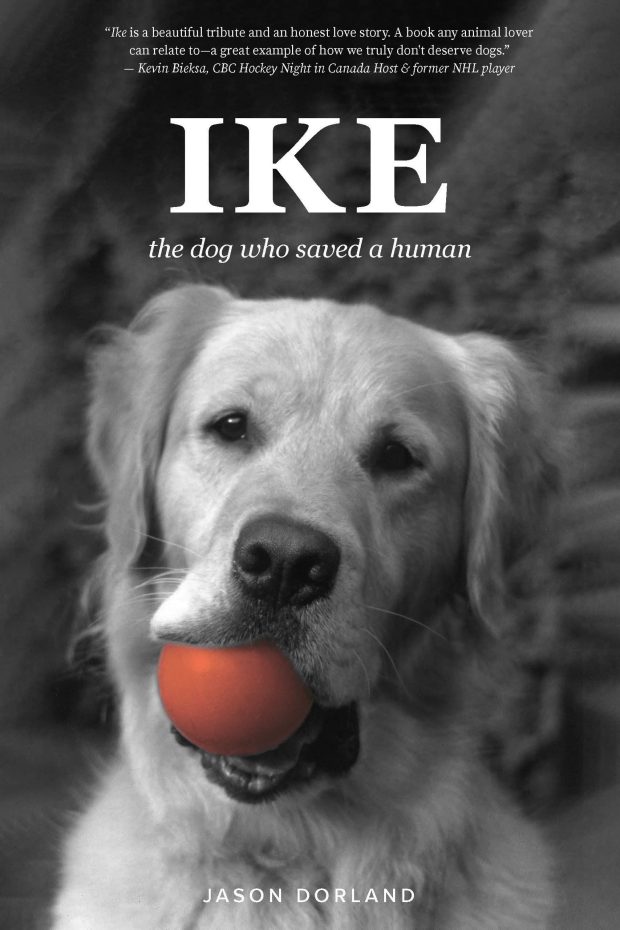
“Deep down I knew that I was meant to be with him — I wasn’t meant to be a guide dog” Ike ~ p. 127
Some books make you think. Others make you feel. Jason Dorland’s Ike: The Dog that Saved a Human does both — while also offering a deeply vulnerable invitation into the life of a high-performance athlete confronting the limits of control, competition, and self-worth. Told through the PoV of Ike, Jason’s dog, this is a book about a man broken by a story he told himself — that winning is everything & losing defines you — and the journey of healing that begins not with a trophy, but with a tail-wagging guide dog gives its owner the safety and trust to explore himself, meet his future wife, and be able to learn from her. This is a book about transformation, but also about leadership beginning with work you do on yourself.
You would be interested in this book if…
-
You are a coach, educator, or parent who believes in the power of relationship over results.
-
You’ve ever struggled with the “winner-takes-all” mindset of elite sport or performance culture.
-
You’re exploring what psychological safety, journaling, vulnerability, and compassion can do — not just for others, but for yourself.
-
You love dogs. Like really, really love dogs.
Section 1: From Perfection to Presence
At its core, Ike is a story of transformation. Jason Dorland — Olympic rower, lifelong competitor, highschool teacher, artist and elite coach — begins the book seeing Ike’s training as a challenge to be conquered: he starts off seeing Ike as a widget, not as a soul – how to be the best guide dog. But as his carefully planned guide dog fails to meet expectations, something surprising happens: Jason begins to listen. And what he hears — through long walks, persistent disobedience, and quiet companionship — is himself. Ike becomes a mirror for Jason’s unhealed Olympic trauma, a vessel through which Jason begins to understand that presence matters more than perfection, and that dogs, like humans, thrive not in fear but in trust.
Section 2: “Together We Fly” — Redefining Competition
Robyn Meagher, Jason’s partner and a decorated runner herself, becomes another guide in this story. One of the most powerful shifts in Jason’s journey happens through her philosophy of racing. On page 185, Jason challenges her for hugging competitors before a race, believing that “killer instinct” was the only path to winning. But Robyn replies:
“I don’t see it that way. Whether I win or lose, I want to enjoy the feeling of running fast on the track. I want to see what I can do with my competitors there to challenge me.”
And then, on page 243, she delivers the mantra that becomes the emotional centre of the book:
“I run with my competitors, not against them. If we all run faster and further, then we all run faster and further. Together we fly.”
This subtle but radical shift reframes the very nature of competition — not as a zero-sum war, but a communal act of becoming. It’s a lesson Jason needed Ike to teach him first.
Section 3: Vulnerability, Journaling, and the Power of Slowing Down
Throughout the book, Dorland leans into vulnerability with honesty and grace. The man who once burned with shame after losing in Seoul learns — through Ike — how to slow down, how to journal, and how to notice the emotions beneath the performance. Ike created a space of psychological safety, and it’s in this space, a space that is created by Ike, but really shaped by Robyn, that old stories start to dissolve. For readers who work with young people — especially in high-stakes, high-pressure contexts — the book becomes a call to consider how safety, not pressure, leads to growth. Dorland’s reflection on journaling is especially valuable: it offers a model of emotional processing that’s accessible, authentic, and profound.
Section 4: Leadership Lessons in Love and Loss
Of course, Ike doesn’t live forever. And the grief that arrives near the end of the book is palpable. But the transformation is complete: Jason, once armored and alone, now moves through the world with openness, acceptance, and a new clarity about how to lead others — not with fear, but with empathy. Ike is, ultimately, a book about leadership. It’s about how to coach with love. How to be true to yourself and your values. And how to build relationships that can carry others — and yourself — to places of unexpected strength.
Final Thoughts
There are a lot of great books about sport, about coaching, about transformation. But Ike: The Dog that Saved a Human is different. It’s tender. It’s true. And it reminds us that the greatest journeys don’t begin on podiums — they begin when we allow ourselves to feel, to trust, and to heal.
If you work with students, athletes, or teams — or if you’re someone trying to move from “What did I win?” to “Who did I become?” — this book belongs on your shelf.