Book Review: “The Siren’s Call” (Chris Hayes)

In the epic tale, Jason lashed himself to the mast of his ship, commanded his crew of Argonauts to put wax in their ears, all to avoid crashing upon the rocks of the Sirens. But why didn’t Circe recommend wax in his own ears? Why was he yelling at his crew to change course? How did Jason and his crew survive the Siren Song?
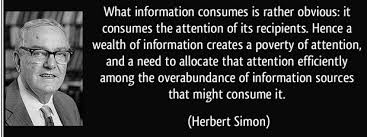
This is the provocation that Chris Hayes puts in front of the reader in his book “The Siren’s Call. It is an examination of what attention is, how it has been commodified, and is no longer within our own control. In an age of an overwhelming amount of information, there is a war on attention: “Information consumes Attention”.
This book brings together a lot of different themes and challenges that leaders and educators face today, and weaves them into a coherant whole.
You would be interested in “The Siren’s Call” if…
(1) You’re fascinated by how our attention is being turned into a commodity in today’s digital age.
(2) You’ve ever pondered whether our constant connectivity is harmless or harmful,
It’s a thought-provoking read that aligns well with other works you might have explored, like Johann Hari’s, “Stolen Focus“, where he tells the reader that if they are feeling distract, it is not their fault it is by design; or, Jenny Odell’s “The Art of Doing Nothing“, where she urges readers to disengage from the attention economy’s demands and embrace deeper, more intentional forms of engagement; or, David Sax, “The Future is Analog” where he advocates that we need to reframe HOW we educate, and that has to involve technology is a meaningful way. Each of these books, linked above to my book review of them, are referenced directly or indirectly throught “The Siren’s Call.”
You might not be interested in this book if…
(1) You’re seeking straightforward solutions. Like Rushworth Kidder’s “How Good People Make Tough Choices,” Hayes’ book doesn’t offer a neat formula. Instead, it challenges you to wrestle with the reality that our attention is being mined like a resource.
(2) You’re seeking respite from the war on attention. Throughout, his examples pile up and pile on the next, and it can be overwhelming to see yourself, your habits reflected back at you.

Click the image to hear Chris introduce this book – and look at the comments on the side. Classic Trolling…addressed in his book too!
Information Consumes Attention:
As Herbert Simon noted and Hayes highlights on page 164: “In an information-rich world, a wealth of information creates a poverty of attention.” How might we, as educators, ensure that the ‘signal -to-noise’ ration is mangeable across age and stage? The more information is out there, the more fractured our shared sense of community becomes: we can watch anything at anytime, and when we connect with others, we find ourselves more often then not, saying “Did you see this reel…” or “This thing came across my feed – did you see this?”. What might be the solution?
Hayes builds on this to argue that we risk living in a “boring apocalypse,” where we’re never truly bored in a productive way—only endlessly idle, scrolling through infinite feeds without giving our minds the space to daydream or recharge. The calls us back to Jenny Odell’s work on the art of doing nothing for nothing’s sake. Our biology and neurology need boredom in order to process, think differently and make sense of our use of time.
@cbsmornings In his new book, Chris Hayes makes the case that today the world’s most endangered resource is human attention and that ruthless competition for our attention is changing how we live our lives. Brook Silva-Braga caught up with Hayes to discuss “The Sirens’ Call.” #booktok #screentime #tech #news #attention #books
In Education, why this matters:
As educational leaders, we must ensure that our mission, vision, and values are the compass guiding where we direct our attention. Hayes’ book invites us to reflect on whether simply banning distractions, like cell phones as Jonathan Haidt suggests, is enough—or whether we need to create richer environments that encourage intentional focus. We need to consider how to help our communities prioritize what truly matters, rather than being swept away by the noise.
This book does serve as a call to action for educators and leaders to steward learning environments and culture that continually draw attention to the things that matter.
In closing, for educational leaders:
Ultimately, “The Siren’s Call” reminds us that protecting attention is about more than just avoiding distractions; it’s about creating a culture that values meaningful, focused engagement. As leaders, we need to create spaces where boredom can sometimes be productive, where we’re not just idlely scrolling but actually giving ourselves and our students the room to think deeply and creatively about what truly matters.
I highly recommend this book for its examples, research and for the author’s injection of his own experience and the part that he, as an MSNBC TV personality, and podcaster, plays in the war on attention.