Book Review: Forward Together (George Couros)
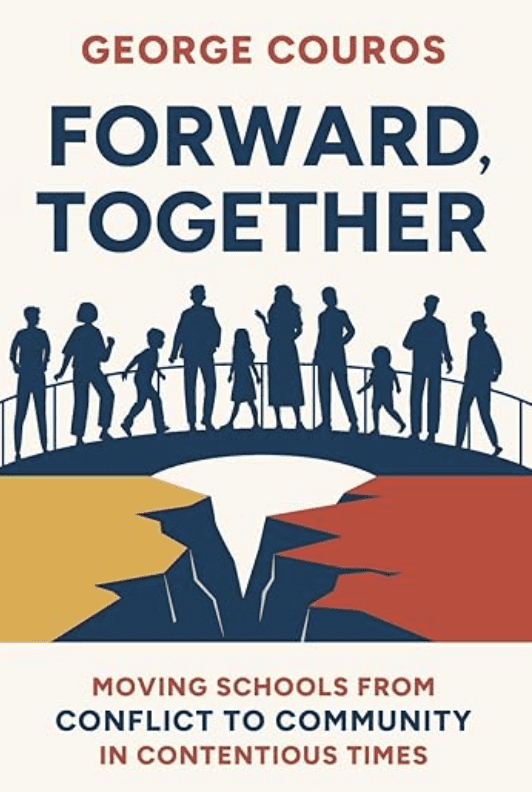
Forward, Together: Vulnerable Leadership in Contentious Times
“Do not judge people for not being where you are today. You weren’t there yesterday.”
There are books we read to learn, and books we return to again and again to be reminded of what matters. Forward, Together by George Couros is both. Full of hard-won wisdom, vulnerable storytelling, and practical reflection tools, this book offers school leaders a roadmap for navigating complexity with compassion.
It’s not about leading from the front; rather, it’s about leading from within—how to hold on to your principles when they’re hardest to uphold, how to embrace criticism without losing yourself, and how to truly move people forward, together.
You would be interested in this book if…
* You are a school leader, department head, or teacher trying to lead change amidst tension, exhaustion, or skepticism.
* You believe in values-based leadership grounded in empathy, reflection, and purposeful action.
* You’re seeking a balance between vulnerability and strength in your professional role.
* You want to work with your community, not around or above it.
* You are a stoic, looking for validation as a values-based leader
You might not connect with this book if you’re seeking a purely strategic, metrics-based approach to change. This is not a playbook, and George is transparent that he does not offer any solutions or specific strategies. He sets the reader up through Principles and Perspectives, and provokes the reader, through his stories and anecdotes (i.e. his wisdom), to question and articulate their own.
Vulnerability is a Leadership Strength
Below is an anecdote that George shares in the book. It’s a great story of failure, learning and then growth, and how these lead to opportunity. Listen to the story below, and see what you take from it…
This is just one example of the stories that are shared and he is able to pull great wisdom from these. He does this by examining his experiences in two ways:
But reader beware – George has a history of telling it like it is. In fact, this is a major theme that he explores throughout the book: his past mistakes.
The above is one example of how George responds to the opinions of others.
Structure that Supports Reflection:
The book is smartly divided into two sections: Principles and Perspectives. In the Principles section, Couros offers powerful guidance for leading change: know your organization, listen carefully, embrace technology with intention, and understand that leadership often means being misunderstood.
His “Educator’s Paradox” is a particularly resonant idea: “Through a lens of empathy, you are more likely to better understand the needs, fears, and goals of others to help them take steps in their journey and move forward, together.” (p. 37)
Each chapter ends with well-crafted questions for reflection or discussion—perfect for leadership teams or book clubs. The design of the book encourages ongoing dialogue, not just passive reading.
Technology as a Tool for Transformation:
Couros began his career as a technology teacher, and it shows. He positions technology not as a silver bullet but as a multiplier of impact when used intentionally. Speaking to the current AI moment, he re-frames the common cliché:
This isn’t about chasing the latest app. It’s about shaping culture, crafting better experiences for students, and staying aligned with why we got into education in the first place.
Leading with Vulnerability, Facing Criticism
One of the most compelling chapters is titled “Someone Hates You.” It’s not clickbait—it’s truth. Couros tells the story of a student named Kyle, and a faculty member that didn’t respond well to Kyle’s story. This is a great story about standing up for what you believe in the face of an audience you don’t particularly know well. This story really stood out to me because of what it taught him about resilience:
“If we let everyone who hated us or strongly disliked what we had to say stand in the way of our efforts to build community and move forward, we would all be frustrated and stuck.” (p. 104)
That clarity, that honesty, is what makes the book work. He doesn’t tell you how to avoid criticism—he shows you how to stay grounded through it.
Another gem is the chapter titled “Don’t Get Used to the Smell.” It’s a metaphor that hits home:
“Even the worst of smells—we get used to it… Don’t dim your light because someone else isn’t ready for you. Keep going. Whatever you do, don’t become someone you are not.” (p. 118)
For leaders who feel stuck or stifled, this book offers both permission and encouragement to move toward fresh air.
Stoicism for the Staff Room:
Couros encourages leaders to confront self-judgment with honesty and care; this reminded me of the work and wisdom of Marcus Aurelius and Danny Bauer’s Calm in the Chaos.
To be forewarned is to be forearmed – and for anyone embarking on change, George invites the reader to consider the following questions:
What is my purpose?
How can I serve others?
How can I build on my strengths?
How do I learn to identify my shortcomings and mistakes and grow from the process?” (p. 122)
These questions are powerful to consider because they are at a powerful intersection of leadership and inner work—and a reminder that reflection is not indulgence. It’s survival. Or as I like to say “Sur-Thrive-al”
Final Thoughts: A Book to Keep on Your Desk:
Forward, Together is not just a title—it’s a mantra. The book’s gift is its clarity of purpose: don’t lead alone. Don’t lead above. Lead forward, together.
This book should live on the desk of every leader navigating complex communities. It doesn’t promise perfection, but it does promise perspective. And in contentious times, that’s what we need most.
Highly recommended.
This is an incredible build upon the book, and I am a little mad that you said, “Forward, Together is not just a title—it’s a mantra.” I had a George Costanza moment and thought, “That’s what I should of said!” I love all of what you said and you provided some great reminders of what so many schools are striving toward and currently achieving. Honored by the recommendation! Thanks, Garth!