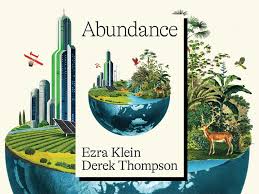
Book Review: Abundance by Ezra Klein & Thompson
“Abundance, as we define it, is a state in which there is enough of what we need to create lives better than what we have had.”
— Ezra Klein & Derek Thompson
Ezra Klein and Derek Thompson’s Abundance is a forward-looking, hopeful and optimistic exploration of the future for those who believe the future is something we invent, not just inherit. It’s a book about how we can reshape our collective mindset toward an era where we don’t just distribute resources, but also generate new ideas and opportunities. The authors urge us to look beyond scarcity and see the potential for abundance in the building blocks of the future: housing, transportation, energy, and more.
You Would Be Interested in This Book If…
-
You’re an educator or leader interested in how future-focused thinking can shape today’s classrooms
-
You want to explore how technology and policy influence each other and the world students will inherit
-
You’re curious about how to foster a mindset of innovation and abundance in education and beyond
-
You’re looking for a thoughtful critique of the “eureka myth” and the real process of turning ideas into reality
1. Technology as a Force for Change
Klein and Thompson emphasize that technology isn’t just a neutral tool—it’s infused with values and politics. As they put it, “the technology we develop will shape the politics we come to have.” This insight is crucial for educators: the tools we choose in classrooms can shape the mindsets and values of the next generation. It’s a reminder that integrating technology is about more than engagement—it’s about shaping the future.
There is a poignent example that they track throughout the book: Solar Power. From its invention in 1954, to the increased adoption through the last 5 years as prices lowered, and it became more accessible, to the future of solar power in the near, short and long term, the authors thoughtfully explore how current challenges can be overcome through policy change. This is an example of technology changing the way, the speed at which we need to make changes.
2. The Power of Ideas and Innovation
One of the book’s central themes is that progress is fueled by the constant search for new ideas. They argue that we must resist the notion that “everything has been invented” and instead cultivate a culture of moonshot thinking. They explore how hard it is for new ideas to emerge, due to an increased preferrence for funding mostly ideas that are familiar and that will guarantee a pay-off for investors. For educators, this is a call to foster environments where students see themselves as innovators and problem-solvers, not just consumers of existing knowledge.
An example that they provide is affordable housing. How might we ensure that government policies, invented to ensure compliance, equity, and resist corruption, doesn’t hold back new ideas from being brought to market. They explore the housing crisis across different cities in the United States, and through the lens of homelessness, use data-rich exploration to bring new light to age-old challenges.
3. A New Lens for Decision-Making
The authors encourage us to adopt a “new lens” to tackle the complex challenges of our time. They argue that the same mindset that solved past crises won’t necessarily solve the new ones. This is particularly relevant in education: we need to be willing to reimagine old structures and embrace interdisciplinary approaches to create truly innovative learning environments.
4. Beyond the Eureka Myth: Building What We Invent
Klein and Thompson also debunk the “eureka myth,” reminding us that the true work of innovation is not just in the flash of discovery but in the long process of building and scaling those ideas. For educators, this means teaching students not just to come up with great ideas, but to understand the persistence and collaboration required to turn those ideas into reality. This is why the importance of journey-based assessment, and the levelling of process and product are so important to continue to explore in education.
Final Recommendation
In a world often dominated by narratives of scarcity, Abundance is a refreshing and optimistic. This book has certainly expanded my views on topics such as Generative Artificial Intelligence, and more. I can strongly recommend this book to educators, even though it is not about education directly – rather it is a signal to us on how to prepare students for the future.