My “How Might We” Question:
How might we help alumni discover ways to give back that align with their financial capacity while helping them see how their contributions directly support the transformative experiences that shaped their HTS education?
Introduction
When I started this Cohort 21 journey, I knew our school had untapped potential in our alumni community. But potential without a clear pathway to action is just hope. My challenge was to create multiple entry points for alumni to reconnect with HTS and understand that their support—at any level—directly fuels the transformative education we provide. This wasn’t about asking for big donations. It was about educating our community, shifting mindsets around legacy-building, and making it easy for alumni to say yes.
What We Did & The Impact
This year, my department launched three interconnected initiatives, each designed to meet alumni where they are:
The Giving Catalogue was our flagship project. We identified specific giving amounts within our Student Financial Assistance fund, ranging from something as tangible as a school store gift card or a monthly bus pass, all the way up to a full year’s tuition. This simple shift—moving from “please donate” to “your $50 funds a bus pass that helps a student get to school”—transforms giving from abstract to concrete. We’re still in the communications rollout phase, but the framework is in place and ready to scale.
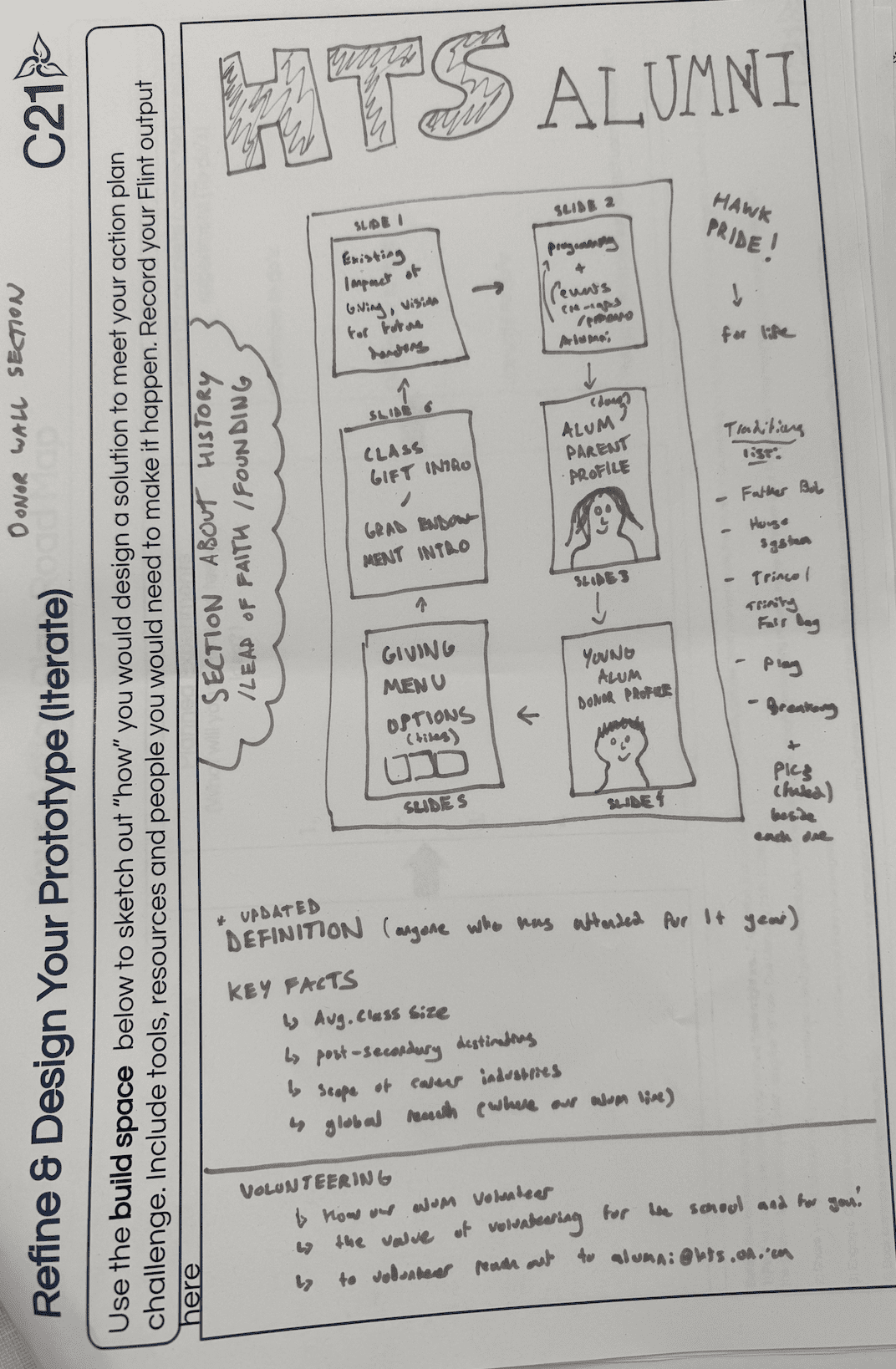
The Alumni Journeys Wall became an unexpected community hub. Every two weeks, we update a campus screen to showcase what’s happening in our broader HTS community and why giving back matters. The response has been remarkable—people stop to read it, take photos, and reconnect with why HTS shaped them. It’s become a quiet but powerful reminder of our mission.
The Class Legacy Gift has been our biggest win. We asked Grade 12 students to contribute 20.26towardaclassgoalof20.26 toward a class goal of 1,200. Not only did we surpass that goal—over 50% of the graduating class participated. This wasn’t just about fundraising. It was a cultural shift. These students are learning that education has a cost, that their school depends on community support, and that they can be part of that legacy. That’s transformative.
The evidence is clear: our alumni community is more engaged than ever. More alumni are attending events, reconnecting with their HTS roots, and—most importantly—beginning to see themselves as stakeholders in the school’s future.
What I Learned
This year taught me something crucial: it’s one thing to present giving opportunities; it’s another to be targeted, thoughtful, and consistent in how you meet people in their actual lives.
I was also surprised by who stepped up through the Class Legacy gift. Some students I thought might hesitate jumped in with both feet—a reminder that a school’s impact runs deeper than what we see on the surface. A student might not be the loudest voice in the hallway, but HTS shaped them profoundly. And that insight translates directly to alumni giving: it won’t just be the “keeners” from their student days who want to stay connected. Impact is personal and often invisible.
The biggest challenge was prioritizing this work within an already relentless events and programming cycle. But my colleagues supported every initiative with grace and answered countless questions about fund structures, budget codes, and the difference between restricted and unrestricted accounts. Coming into this role without formal fundraising training was initially daunting, but I learned that asking for help and building on existing systems creates win-win scenarios for everyone.
Resources to Share
While our Giving Catalogue was inspired by Crescent School’s original model (since removed from their website), everything else was built from the ground up for HTS’ unique community. I’m happy to share:
- Alumni Journeys screen content – the messaging and visuals we use to keep our community informed
- Grade 12 Class Legacy appeal – how we framed the ask to students
- Giving Catalogue framework – the categories, amounts, and thinking behind our tiered giving structure
If you’re working on similar initiatives, reach out—I’d love to share these resources and learn from your work too.
My Big Takeaway
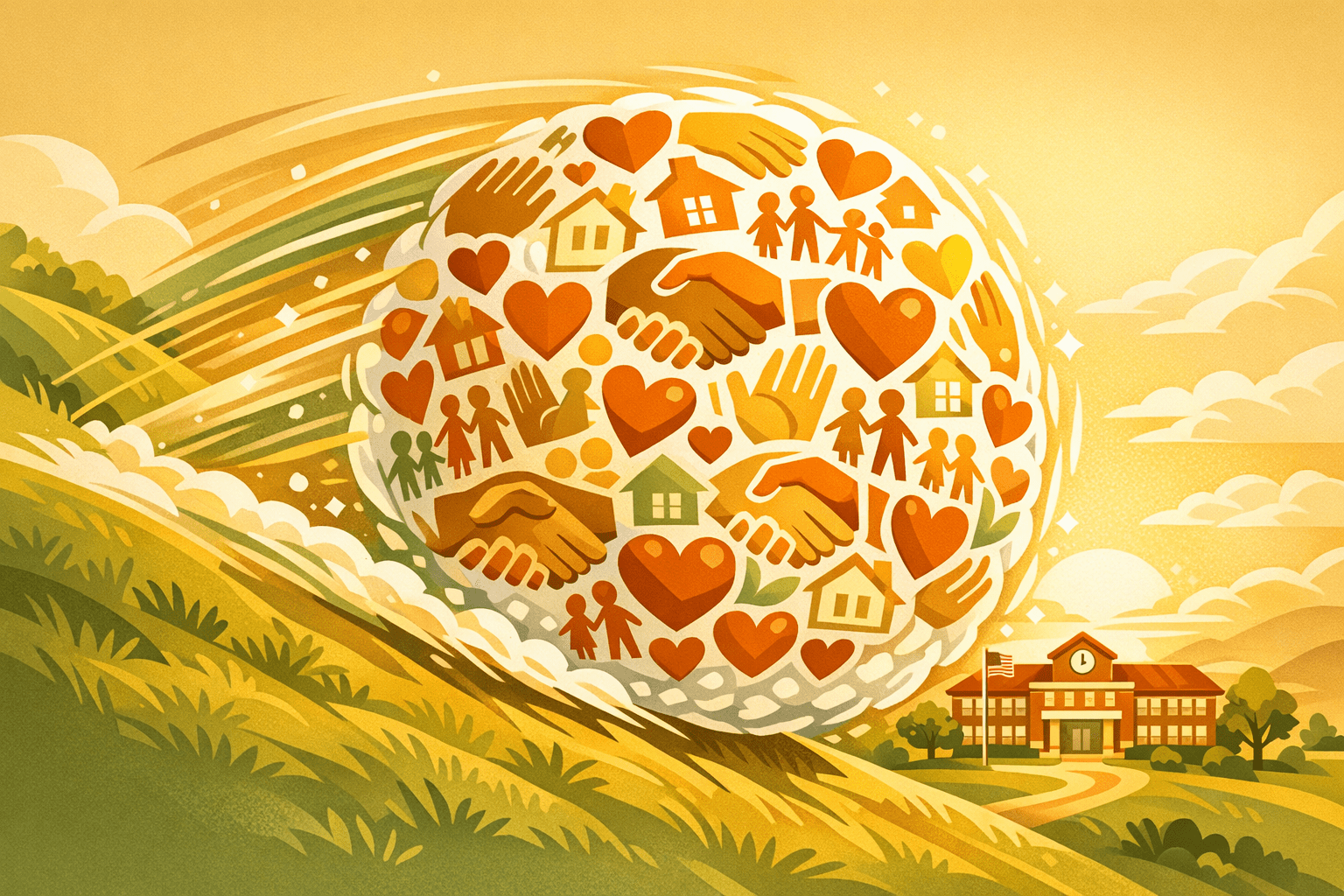
Here’s what this year has taught me: Start small, but throw weight and effort behind that tiny snowball, because once it starts rolling, it can get super big.
The Alumni Journeys wall didn’t need to be elaborate. The Class Legacy gift didn’t need to be a massive ask. But because we showed up consistently, communicated thoughtfully, and believed in what we were building, they became catalysts for real change in how our community thinks about giving back and legacy-building.
My work has always been about education—educating our community, keeping them informed, and shifting their mindset around what it means to support an independent school. This year proved that easy wins, when executed with intention and consistency, create momentum that compounds over time.
Questions Still Unfolding
As I look ahead, I’m curious about how the concept of legacy-building lands differently across our alumni segments—young alumni navigating early careers, alumni in established professional lives, and retired alumni with different capacities and motivations. Understanding these nuances will help us be more targeted in our communications and outreach.
The next big step is developing a comprehensive alumni donor funnel with clear standard operating procedures that help us capture interest, assess capacity, and ultimately convert engagement into sustained giving. This isn’t about being transactional; it’s about building a system that honors each person’s unique relationship with HTS.
Reflections on Cohort 21
This Cohort experience has reinforced something I already believed: that meaningful change doesn’t require grand gestures. It requires clarity of purpose, consistency of effort, and faith that small actions, when aligned with community values, can reshape how people think and act.
As we continue to build HTS’s culture of giving and legacy-building, I’m carrying forward the lesson that our alumni—like our students—are shaped by HTS in ways both visible and invisible. Our job is to create the conditions for them to recognize that impact and choose to sustain it. That’s the real transformation.