AI in History and Humanities
Incorporating AI into High School History: An Ethical & Productive Approach
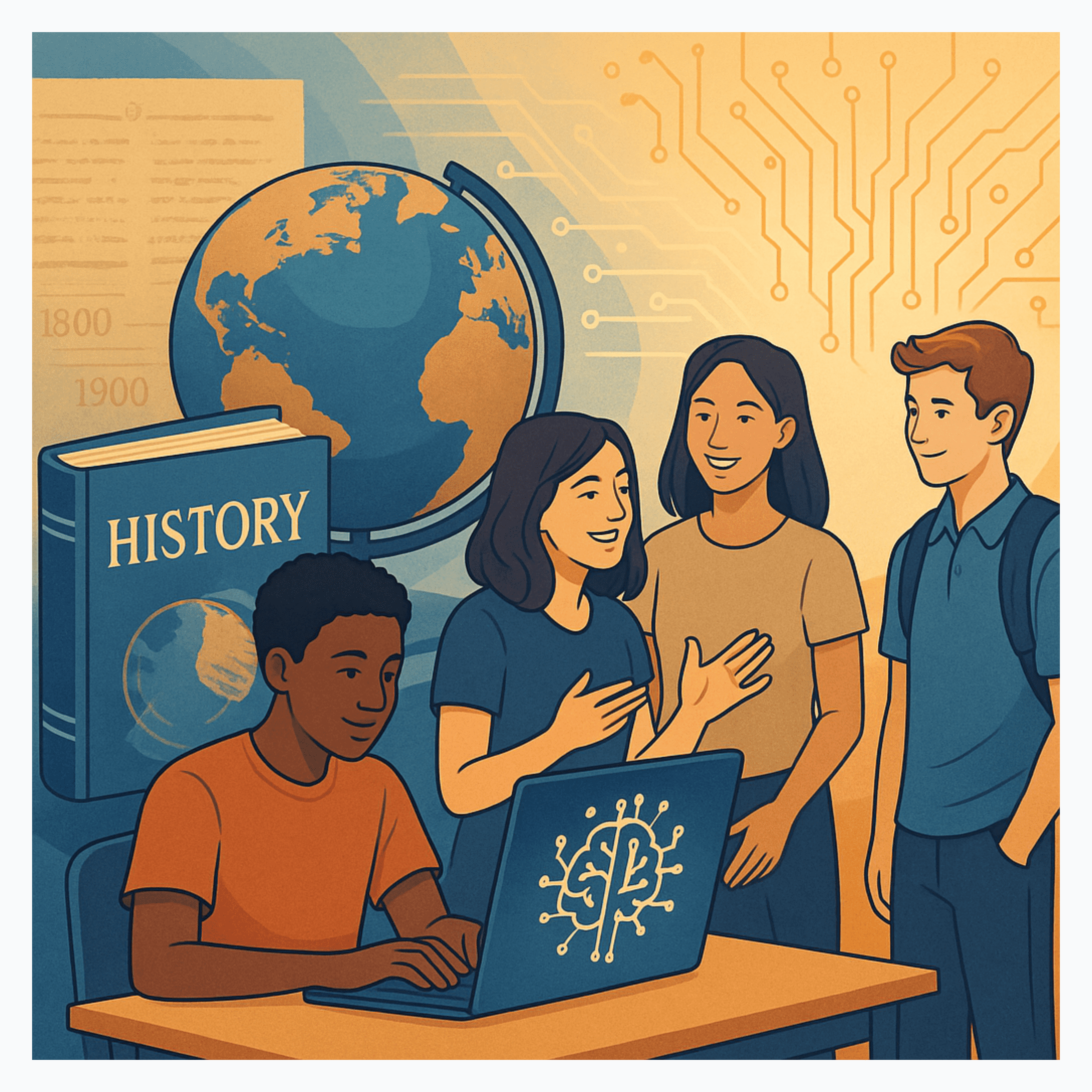
As educators, we’re constantly looking for ways to enhance student learning while maintaining academic integrity. AI tools offer exciting possibilities for history education—but how do we use them responsibly?
Why AI in History?
- Research assistance – Students can quickly gather information on historical events, figures, and contexts
- Primary source analysis – AI can help organize and summarize documents for deeper analysis
- Perspective exploration – Generate multiple viewpoints on historical events to encourage critical thinking
- Writing support – Help students organize ideas and improve clarity (not write for them)
- Accessibility – Support diverse learners with different needs
Using AI Ethically & Productively
Do:
- Use AI as a learning tool, not a shortcut to answers
- Teach students to verify information against reliable historical sources
- Have students cite AI usage in their work transparently
- Use AI to generate discussion questions and debate prompts
- Encourage critical evaluation of AI-generated content for bias and accuracy
- Set clear guidelines about when and how AI can be used in assignments
Don’t:
- Allow students to submit AI-generated essays as their own work
- Use AI as a replacement for primary source analysis
- Assume AI summaries are always accurate—history is nuanced!
- Skip teaching traditional research and writing skills
Practical Classroom Ideas
- Fact-checking exercise: Have students use AI to research a topic, then verify findings with primary sources
- Debate preparation: Use AI to generate arguments from different historical perspectives
- Writing workshops: Students use AI for brainstorming and outlining, then write their own analysis
- Source evaluation: Compare AI summaries of events with actual historical documents
My Goals
By integrating AI thoughtfully, I want my students to:
- Develop critical thinking skills – Question sources, including AI
- Learn historical thinking – Understand that history requires interpretation and evidence
- Prepare for the future – Learn to work with AI tools responsibly
- Stay engaged – Use modern tools while maintaining academic rigor
The Bottom Line
AI is a tool—like any resource, its value depends on how we use it. By setting clear expectations and teaching students to think critically about AI-generated content, we can harness its benefits while maintaining rigorous historical thinking.
What’s your experience with AI in the classroom? Share your thoughts!