
This reflection has encouraged me to think about time differently—not simply in terms of efficiency, but in terms of slowing down. In a busy kindergarten classroom, there can be a tendency to move quickly from one experience to the next. However, some of the richest learning happens when children are given time to stay with an idea, revisit an experience, repeat something, encounter a problem, and change their thinking. Slowing down allows me to observe more closely, listen more intentionally, and notice the theories children are developing through their work and inquiry.
 I am deeply inspired by the work of Loris Malaguzzi and this connects closely with the Reggio Emilia image of the child as capable, competent, curious, and full of potential. Children are not simply recipients of information; they are researchers and co-constructors of knowledge. Their ideas deserve time to develop. Rather than quickly providing an answer or moving children toward a predetermined outcome, I want them to be comfortable in allowing questions to remain open and giving children the time and conditions they need to investigate their own theories.
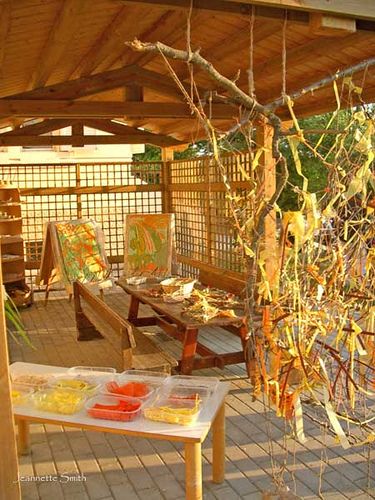
Materials play an important role in this process. In a Reggio-inspired environment, materials are not simply used to complete an activity. They can become languages through which children investigate and communicate their thinking. Clay, loose parts, wire, paint, natural materials, light, drawing materials, photographs, and other open-ended resources can give children different ways to represent an idea, test a theory, encounter a problem, and reconsider what they thought they knew. When materials are thoughtfully selected and made accessible within the environment, they can provoke further exploration rather than direct children toward one expected result.
I am beginning to see time, space, and materials as deeply connected. Children need time to explore without being rushed, spaces that invite investigation and collaboration, and materials that are rich enough to support multiple possibilities. When these three elements work together, the classroom can become a place where children’s theories are not only expressed but revisited, challenged, extended, and transformed.
I think one of my professional goals is to help colleagues better understand how Reggio Emilia inspired practices can be used meaningfully within the classroom. At the heart of this approach is the belief that children are capable thinkers whose questions, theories, and ideas are worth exploring. I would like to support coworkers in seeing how intentional use of time, space, materials can create opportunities for children to investigate ideas, revisit their thinking, solve problems, and communicate their understanding in many different ways.
No Comments so far ↓
There are no comments yet...Kick things off by filling out the form below.