
Cohort 21 Is a Journey, Not a Destination
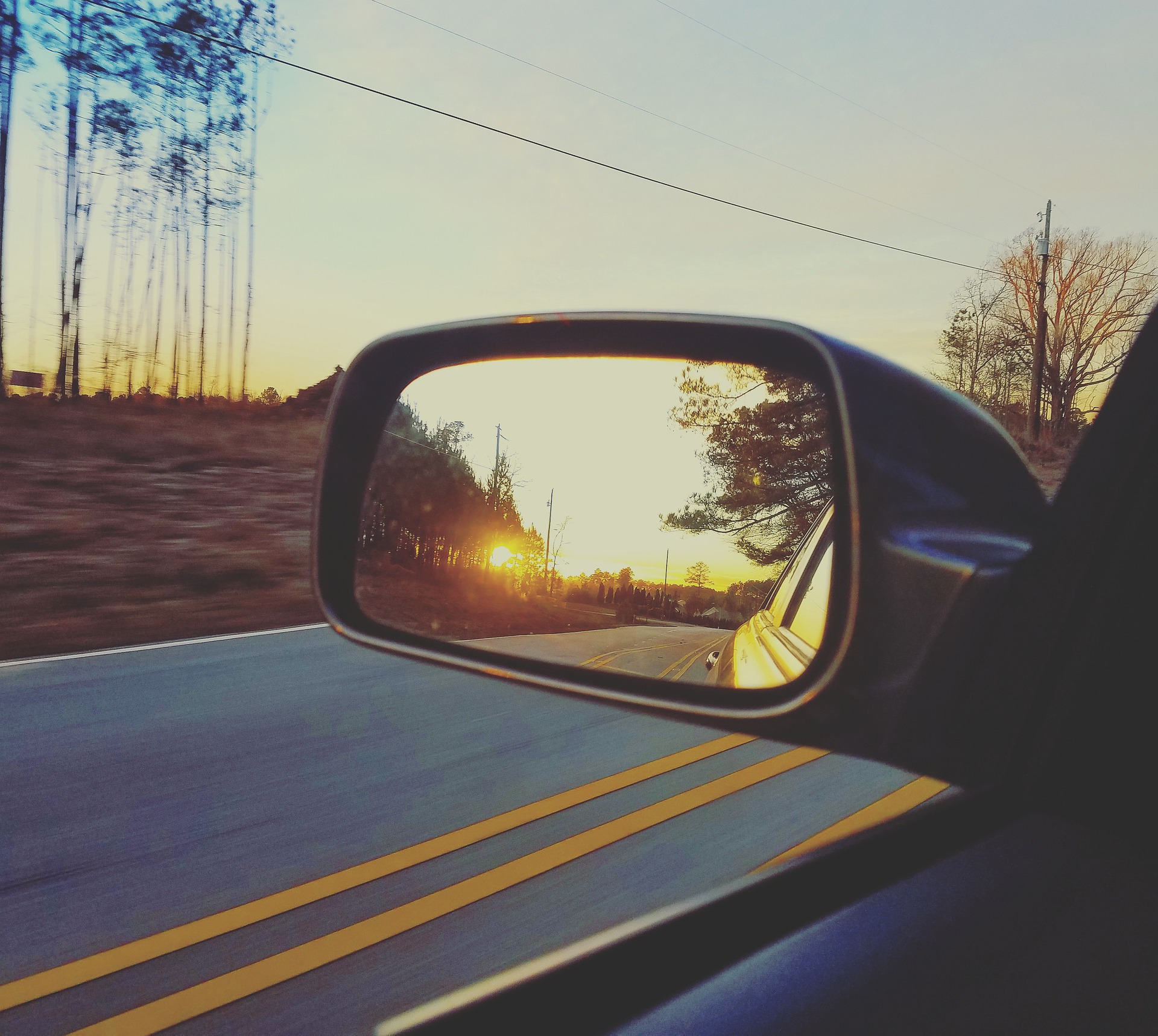
I started out my Cohort 21 journey on a road not really knowing where I was going. I hopped in my Cohort 21 car and buckled up, and despite the tremendous support from team “Be More Dog” (including Graham, Tina, Sam and Isabella) once I was actually behind the wheel, I was not too sure where to go! I was in the driver’s seat. I was a bit cautious, as I pushed the start button and slid the car into gear. Where did I want to go? What is really important to me? It took me a while to gather my bearings, but instead of just sitting there idling in the driveway I pulled out and slowly cruised around my educational neighbourhood to see what I could learn.
The first leg of my journey was a pleasant drive, despite missing and flying right past the first rest stop, the September Cohort 21 “Face to Face.” With the help of my colleague and a Cohort 21 coach Lisa Mitchell @LMitchellteach, I was able to quickly determine what was urgent and important on my journey. At the front of my mind in September 2021, were the UN Sustainable Development Goals, the Truth and Reconciliation Commission of Canada: Calls to Action #62 and the shadow pandemic or ensuing mental health crisis.
With these three urgent and important issues delineated, I was able to set my GPS and establish a route. I read Braiding Sweetgrass by Robin Wall Kimmerer. Throughout her book, Kimmerer provides numerous examples of how Indigenous people can teach humankind a lot about how to merge with our environment. She points out that in order to have a sustainable environment, we need to start changing our ways to be more reciprocal, and we urgently need to start teaching the next generation (students) how to care for the planet. In a webinar with David Sobel on Place-Based Education “Finding the Good in the Pandemic”, he explained his research on the effect of nature-based experiential learning. Sobel has found that many students have moved outdoors as a result of the pandemic and that the benefits of nature-based experiential learning are significant including reducing students’ stress and improving students’ physical fitness. He emphasizes the need to bond students with the natural world.
Ok! I pump the brakes. This is looking like a great place to stop for a rest stop. Overwhelmingly, in my reading and inquiry, I keep hearing the same answer echoed over and over: I need to take my students outside. By taking my students outside and into nature, I can not only teach the curriculum in an inquiry-based and authentic way, but I can also increase students’ physical activity, boost their mental health, lower their stress levels, increase their immune response, and connect my students to the places where they play and learn. By developing my students’ love of the place (our schoolyard), and engaging their emotions, I can help facilitate the development of the next generation of environmental stewards. Once my students have a relationship with the land, they can begin to explore reciprocity, and how Indigenous people in Canada respect and care for Turtle Island. Through this reciprocity, protecting and living with the land, my JK students can take steps toward reconciliation.
Finally, I had a destination in mind. I was a bit concerned as I was chugging along in the slow lane and some of my Cohort peers seemed to be taking the expressway, but I have always preferred the scenic route. The second January Cohort 21 “Face to Face” was perfectly timed to give me a full tune-up and confirm I was on a good route. Now my navigational system had me well on my way towards: How might we augment the outdoor learning landscape at HSC to enhance inquiry-based hands-on learning opportunities, foster wellness and authentically integrate Indigenous ways of knowing?
So it was full speed ahead! I put the top down and could feel the liberating wind in my hair. Over the course of the next several months, I took steps to provide input on and augment the learning landscape at HSC. I created and completed a Tutty fund proposal for an expensive recess yard makeover. I worked with a team of colleagues on the College’s Strategic Plan and how it relates to the use of outdoor curriculum spaces. I teamed up with our Junior School curriculum coordinator to submit a grant proposal through Learning for Sustainable Future for a sustainability action project. Somewhere along the way, my colleague and environmental education mentor, John Hannah @cya_outside introduced me to Kaci Rae Christopher’s School Garden Curriculum – An Integrated K-8 Guide for Discovering Science, Ecology, and Whole-System Thinking. In her book, Christopher cultivates a permaculture-inspired, place-based gardening curriculum where students “learn and engage in a new land ethic that inspires Care for Self, Care for Others, and Care for the Land and cultivates new generations of changemakers and environmentally conscience global citizens.” Ah-ha! I have reached my destination! (Or have I?) I pop it into cruise control while pondering, can HSC modify Christopher’s School Garden Curriculum to create a comprehensive place-based program that connects to the new Ontario Science Curriculum and exposes students to the natural world through gardening? We can! We’ve got this. It is going to be a smooth drive from here!
Suddenly, there is a pothole on the road – David Sobel’s Climate Change Meets Ecophobia! In his article, Sobel ponders if place-based environmental education alone actually changes students’ future environmental behaviour? What!?! I did not see this pothole coming! It is too late to swerve, I have to hit it dead on. Sobel explains that schools do a great job of teaching environmental knowledge, but they spend too little time developing environmental behaviours. He states that schools are a classic example of “do as I say, not as I do” when it comes to environmental behaviours. He believes that schools currently teach how environmental systems work and argues that schools themselves need to be models of sustainable systems. Time to pull over and assess the damage – this is a pretty big pothole. Does HSC lead by example and model a sustainable system? We are a Platinum Certified Eco school. We have solar panels and rain gardens. We have compost bins, recycling bins and BYOC (bring your own cutlery). But, we can do better. We could grow our own food, compost our own waste and create our own biofuel. There is certainly room for improvement to model true sustainability.
Ok. So the pothole is not catastrophic, there is no need to call for a tow, but I did decide to take a u-turn to head back to where I started on my journey. Am I really wondering: How might we augment the outdoor learning landscape at HSC to enhance inquiry-based hands-on learning opportunities, foster wellness and authentically integrate Indigenous ways of knowing? Or am I about to embark on a new journey: How might we develop an environmental ethos at HSC that models environmental sustainability, fosters wellness and authentically integrates Indigenous ways of knowing? Can we develop HSC as a community of care; a place where we not only care for all people, but also care for and prioritize the natural environment, and the planet as a whole?
I slow down the car and signal my turn to pull into the driveway. I think the solution was in my journey all along. I CAN begin to develop an environmental ethos with my JK students by using the outdoor learning landscape at HSC to provide place-based natural learning opportunities. By getting students outside and involved in interesting and fun nature-based activities I AM setting the stage for future stewardship and reconciliation. Matthias Finger found in his 1993 research entitled Does Environmental Learning Translate into More Responsible Behavior? that environmental behaviour is less likely the result of learning and knowledge and more the result of environmental experiences. Students remember the fun things they did, the things that elicited an emotional response. The Anishinaabe describe this heart-based knowledge, Debwewin, as truly knowing something for yourself. Students can develop heart-based knowledge about the environment when they spend time in nature. In order to model environmental sustainability, foster wellness, and integrate Indigenous ways of knowing I need to get my students outside and in nature, establishing their own Debwewin.
I park the car. I am back where I started (but hopefully more informed). Time to refuel, so I can resume my Cohort 21 Journey, beginning with co-creating an HSC K-8 Garden Curriculum and supporting an environmental ethos at HSC. For me, Cohort 21 has been a meaningful journey, not a final destination.