Book Review: “Thrive” by Grant Lichtman
How have I not reviewed this book before? Having known Grant Lichtman for almost a decade, as a friend, thought-partner, thought-leader and incredible author, I’ve picked up this book again, because he will be a guest in the upcoming Season 3, of my podcast with Jason Rogers: Lassoing Leadership.
Thrive is as close to a playbook for change leadership as you can get in Education. From the author of “#Edjourney” and “Moving the Rock” – which I have reviewed in the past, this is a book that brings together the knowledge, understanding and tools for successful education innovation.
You’d be interested in this book if you were:
(1) On a journey towards educational leadership of any step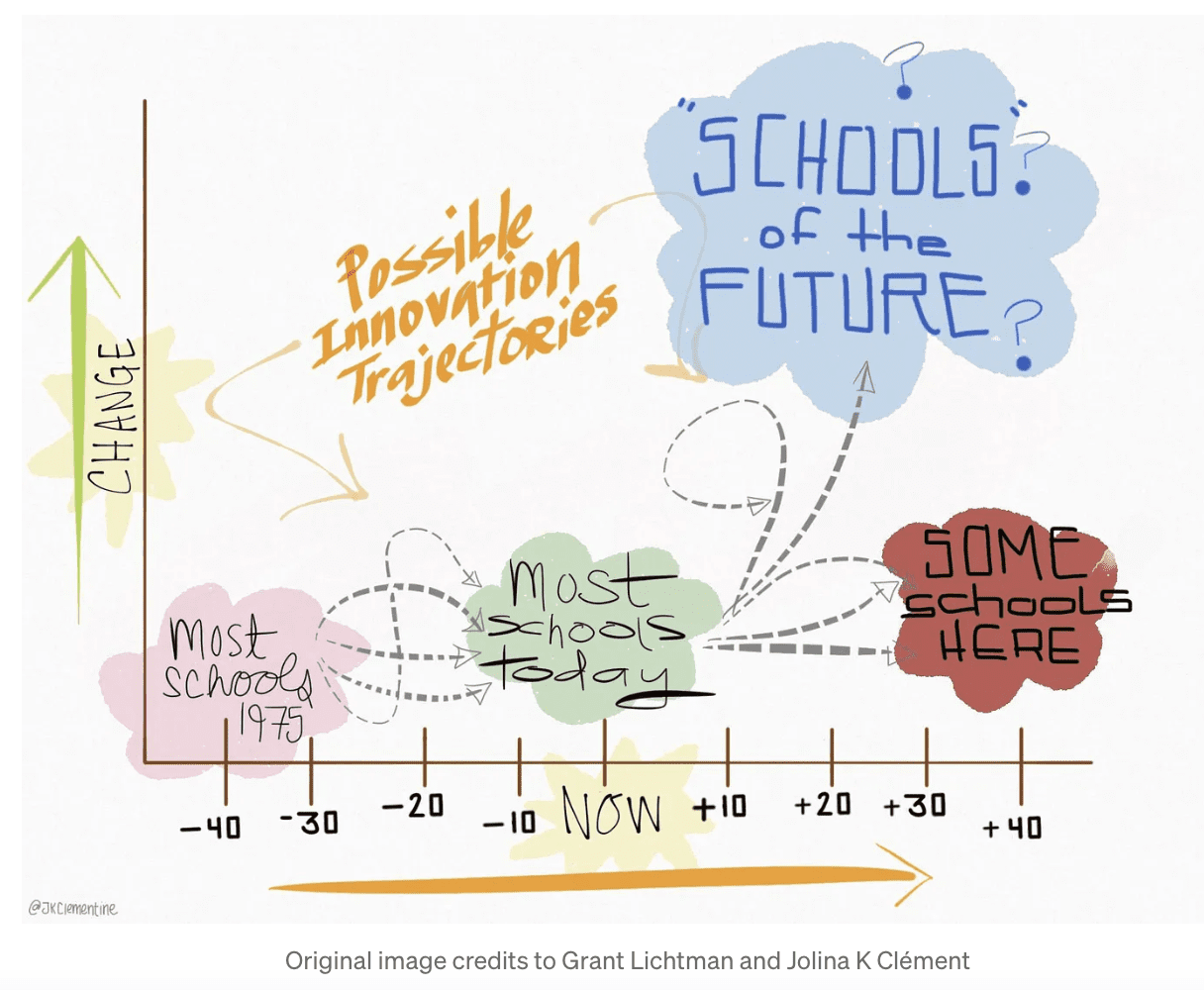
(2) Interested in learning about why schools must change from the status quo
(3) Struggling with change leadership or any change initiative
(4) Looking for tools and protocols to build your resilience and approaches to change
(5) Wanting a refresher on excellent skills, dispositions required to thrive in a VUCA world
The Foundation of Change: Who are you?
This book is the Venn overlap between the best practices of evolving organizations and the realities of running a school… [it is also] about the process of finding and delivering an aspirational value proposition for your school (pg. xxi)
Grant does an excellent job in beginning at the beginning: he lays out the changing times and the social, geographic, economic and political forces acting on schools that are requiring them to change in order to stay relevant. He cites that, “We [in schools] are relatively deficient in innovation DNA.” (pg. 6) and that we need to lean into discomfort by asking ourselves some hard questions about what we do and why we do them: i.e, the Mission, Vision and Values of the school in relation to the market forces.
He encourages school leaders to make time to explore and research within and beyond the educational sector. In this way, we can learn more about who we are, and the opportunities for our school and our value proposition. Leaning heavily on Roger Martin and Seth Godin and other thought leaders, Grant brings their thinking, strategies and questions to the reader in thought-provoking ways. All with an eye to get leaders to consider the WHY and WHO of the organization they lead.
Innovation: What is it good for?
Innovative is about creating, finding and implementing new ideas that add value to the organization in the long term (pg. 28)

I love this definition, because it is NOT about trends, fads, or technology. It is aboutadding value. And what Grant emphasizes throughout is that any and every role plays a part in adding value, based on the strategy of WHO and WHAT you are.
Now Come the Hard Part…
Knowledge and understanding are one thing, but to actually implement innovation, change and discomfort, is easier said than done.
Educators love to agree and include; it is uncomfortable for us to disagree and exclude. Yet strategy requires that we make these choices; we simply cannot be great if we try to be great at everything. (pg. 22)
This book is a great reminder of what strategy is and what it is not: “It is not a short vision statement… It is not a plan either; nor, is it optimizing for the status quo, or following best practices. (pg. 23) Grant cites, “Playing to Win” (2013) by Roger Martin and Lafley to consider their key questions:
(1) What is our winning aspiration? (2) Where will we play? (3) How will we win? (4) What capabilities must we have to win?, and (5) What management systems do we need?
Sometimes, when I was re-reading this book, I was thinking to myself that it might be simplier to just start a school rather than change one!
How to Get There:
The true value, and where this book excels, is in the BIG TOOLS. This is worth the price of admission because Grant provides several tools, explains not only how they work, but also how they work together.
The good news is that, like many trully elegant tools we find in life, the basics are really not that complicated. The core elements are easy to grasp, and if you just start using them, you and your team can master them relatively quickly. Think of these tools as hammers and screwdrivers, not some fancy programmable machine. Just pick up the basics and start using them. You are your team will learn as you go. (pg. 38)
Big Tool #1: Kotter ~ here Grant gives a high level, and effective overview of the work of John Kotter from Harvard Business School.
Big Tool #2: Design Thinking – David Kelly from IDEO best describes it below:
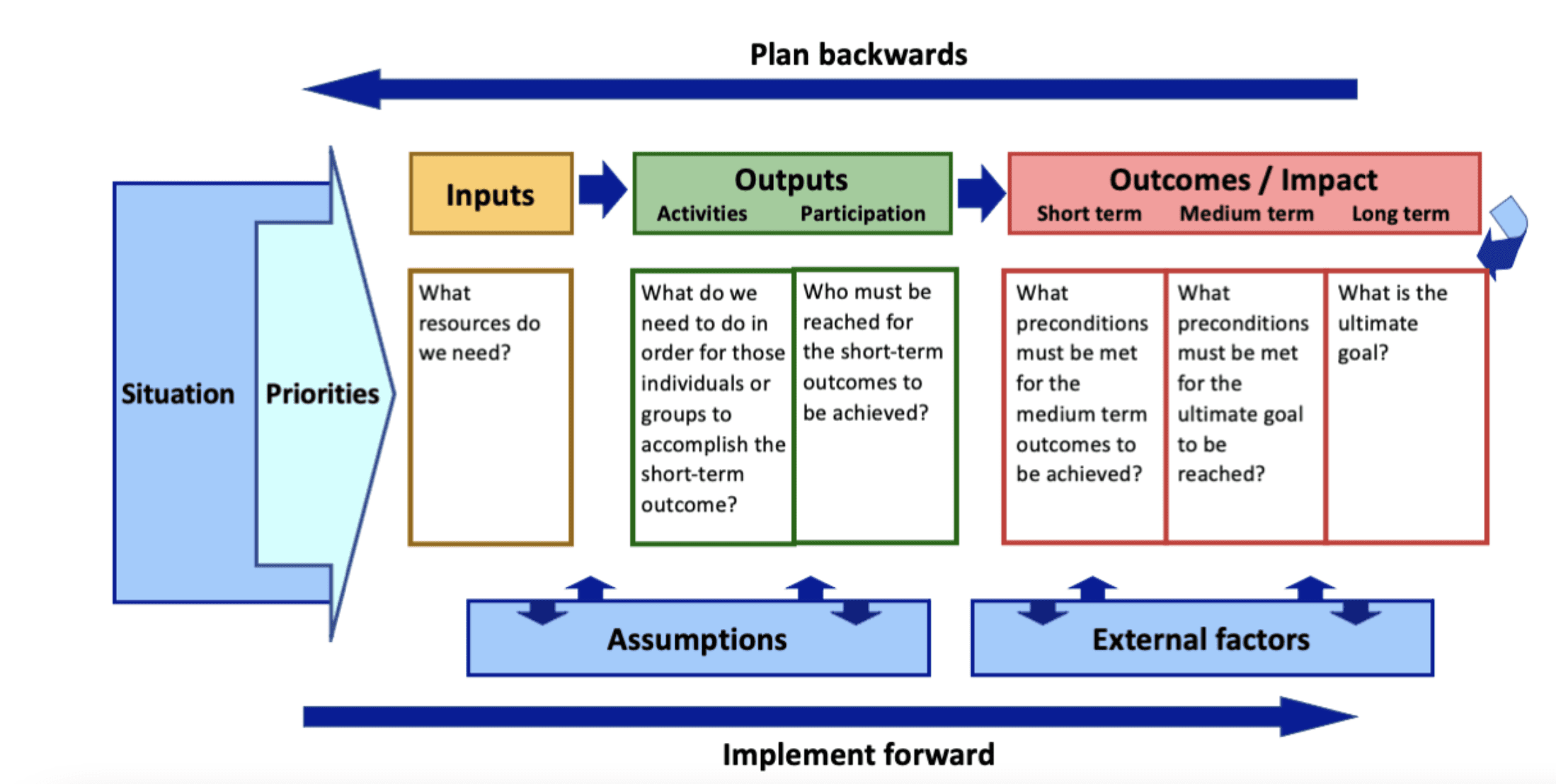
Big Tool #3: The Logic Model of Schools, which many educators will recognize as “backwards design”. An incredible powerful tool build alignment between what you ‘say’ you are going to do, and what you actually deliver.
Big Tool #4: The school innovation Stairway. I use this in my practice often because it is a great way to check-in and see if you are doing what you say you are doing, and if not, why not!
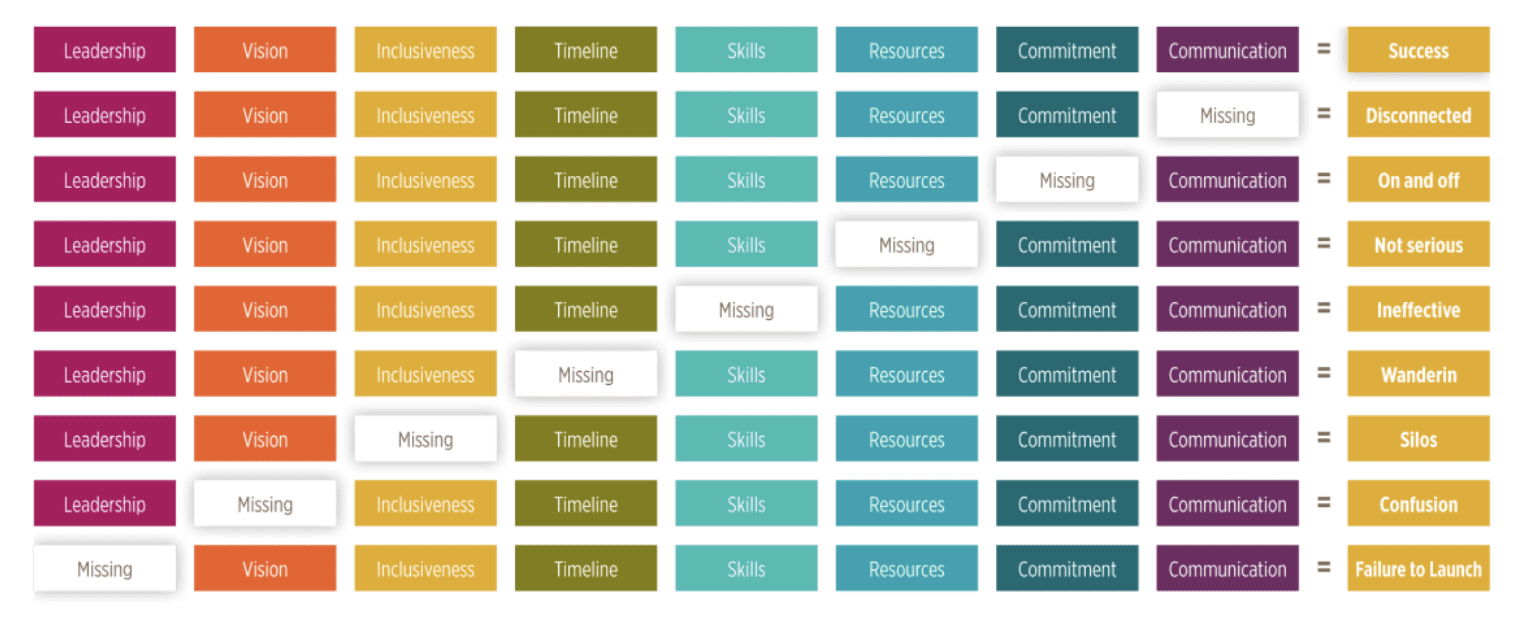
Big Tool #5: The School Operating System. Developed in tandem with his long-time colleague and friend, Bo Adams, this is a way to conceptualize who turning the gears in one part of the system impacts another part. Again, I’ve used this in my own change and innovation projects, and it’s been so helpful realizing who I need to get on my team and who I need to communicate with.
So now what?
This book then goes into the application of these tools and mindsets, and one of the most provocative pieces that I read from the latter part of the book is:
[The three horizons] is a simple tool, but one that should be a part of any school’s strategic ethos because true innovation, the kind that can shift a school from ‘possibly irrelevant’ to ‘potentially irreplaceable’ rarely lies within the horizon we can see or on the ground right in front of us. (pg. 134)
Grant provoks us to consider the investment of time, the commitment and resources required to become better: better at serving our students, supporting our faculty, and our communities.
I am so happy that Grant’s upcoming appearance on our podcast prompted me to revisit this book. I can highly recommend this from when I first read it a few years ago, and again. For any school leader considering change and innovation, this is worth a read to ensure your plans don’t fall flat, and to ensure that they are imbued with purpose, delivered with intention, and evaluated against your values and strategy.