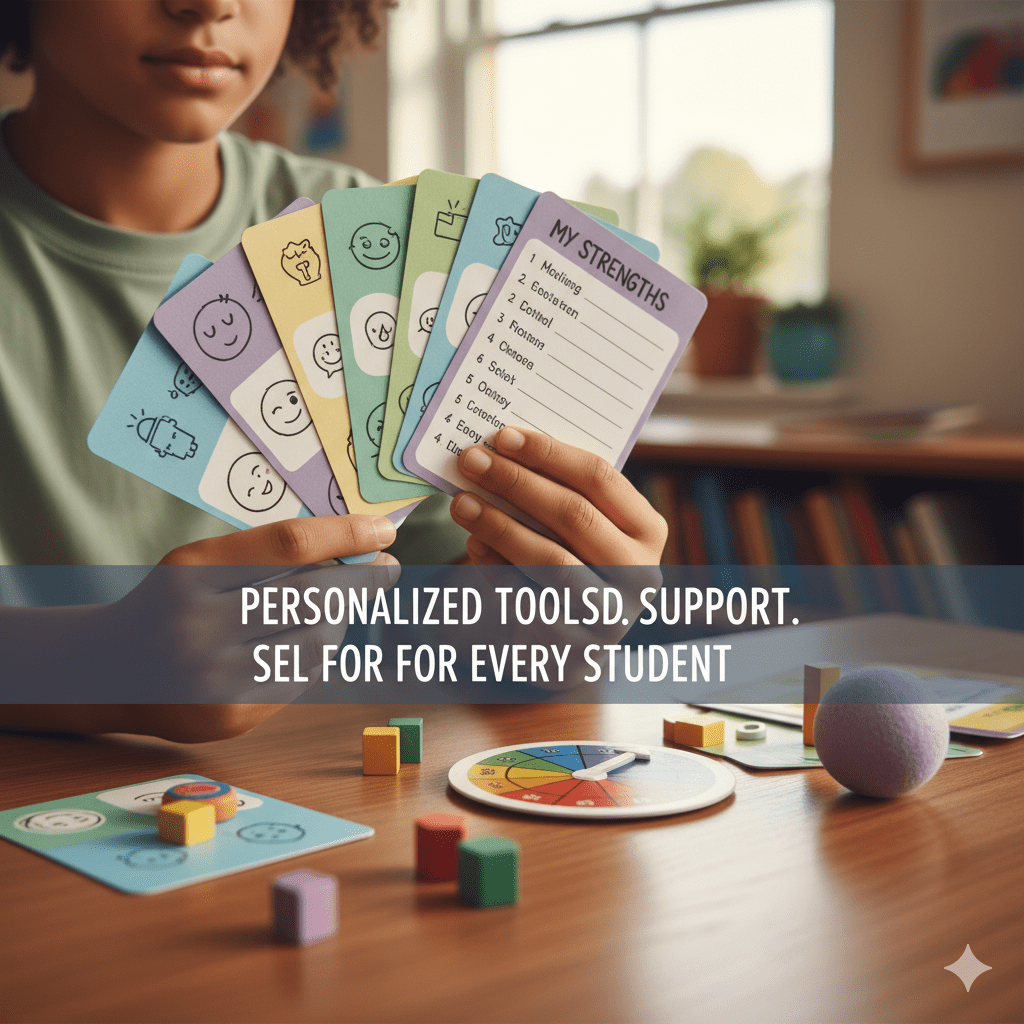
When I started my Cohort 21 action plan as a SEL & Wellbeing Support Specialist, I was thinking about something fundamental: How might we help young students build strong self-regulation skills by creating accessible, schoolwide supports that offer safe spaces and caring co-regulation beyond the classroom?
It’s a question that sits at the heart of what many schools stand for. The school’s mission emphasizes respect, good manners, trying one’s best, and creating environments where students feel safe, supported, and valued. But I recognized something important—these values can’t live only in mission statements. They need to be lived and practiced through systems that actually support students when they’re struggling. My journey toward building a schoolwide co-regulation system is a testament to how one educator’s commitment to her school’s values can ripple outward in ways that touch students, staff, and the entire school culture.
What I Did & Its Impact
My approach was thoughtful and practical. Rather than trying to overhaul everything at once, I developed a 3-tiered co-regulation system designed to meet students where they are:
- Tier 1: Universal supports available to all students—accessible calm spaces and regular check-ins that normalize emotion regulation for everyone
- Tier 2: Targeted supports for students showing early signs of dysregulation—small group strategies and additional adult connection
- Tier 3: Intensive, individualized support for students with significant regulation challenges—personalized plans with consistent check-in protocols and trusted adult relationships
What made this system work wasn’t just the framework itself, but how I implemented it. I developed individualized student support plans for students in Tier 3, creating concrete pathways for how different adults in the school could support each child. These weren’t one-size-fits-all documents—they reflected each student’s unique needs, triggers, and what actually helped them calm down and refocus.
I took a pilot approach, starting with select students rather than trying to transform the entire school overnight. This gave me space to learn, adjust, and gather evidence about what was working. It also meant I could build relationships carefully and make sure the system was actually serving students, not just existing on paper.
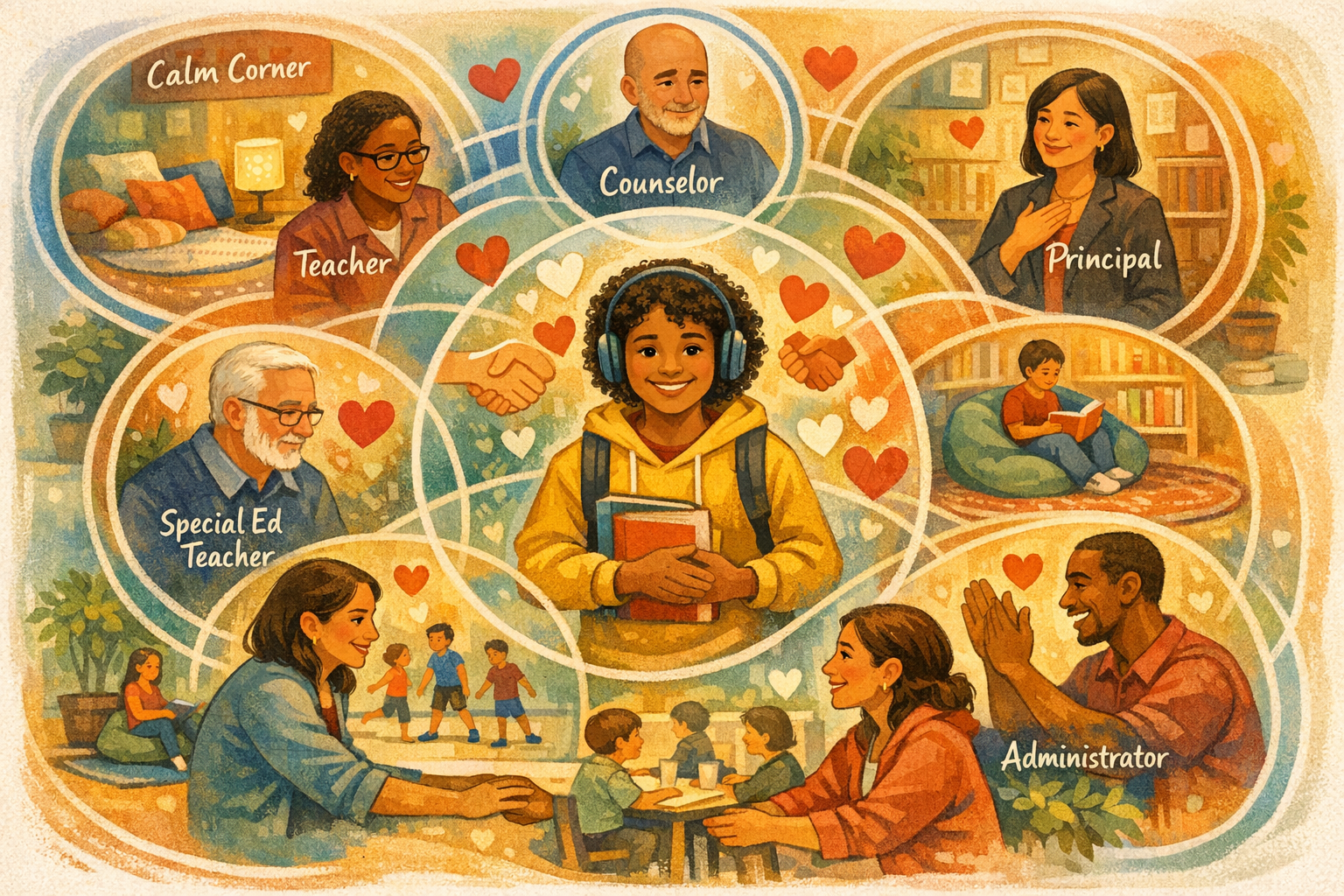
The impacts were real. Students began building connections with different teachers beyond their classroom—adults who knew them, who they could trust, and who were trained in how to support them. Instead of feeling like they had only one safe adult in the building, students developed a network of caring relationships. They also gained actual safe spaces for their emotions, places where dysregulation wasn’t seen as a problem to punish but as a signal that a student needed support. Perhaps most importantly, staff felt more prepared and supported. Teachers weren’t left wondering what to do when a student was struggling. They had frameworks, strategies, and the confidence that they weren’t alone in this work.
What I Learned
If there’s one insight I keep returning to, it’s this: letting go and leading is more powerful than doing everything yourself.
It would have been easier, in some ways, for me to become the co-regulation expert—the person everyone came to, the one who handled all the challenging students, the teacher who had all the answers. But that would have created a system dependent on one person’s heroics, not a sustainable, schoolwide culture shift. Instead, I focused on building capacity in others. I trained staff, shared resources, and created systems that other educators could own and implement. I led by empowering, not by controlling.
This mirrors something fundamental in my school’s values. The school talks about fostering growth mindset and resilience—and that’s not just for students. It’s for staff too. When I stepped back from doing everything and instead created conditions for others to grow into this work, I was modeling the very resilience and growth mindset the school hopes to cultivate. I was saying: I believe you can do this. I’ll support you. We’re doing this together.
It’s a different kind of leadership—one rooted in trust rather than control, in shared responsibility rather than individual burden.
Resources to Share
Throughout my journey, I curated resources that proved invaluable for understanding and implementing co-regulation systems. Here are my top resources for educators ready to take on this work:
| Resource | Description & Link |
| Tiered Systems Framework | A foundational resource for understanding multi-tiered systems of support (MTSS). This framework helps schools structure universal, targeted, and intensive interventions. It’s the backbone of how I organized my co-regulation system and provides the conceptual clarity needed to move from scattered efforts to coordinated, schoolwide practice. Visit PBIS.org for comprehensive tiered systems guidance. |
| Co-Regulation Guides | Practical, actionable strategies for adults supporting student emotion regulation. These guides move beyond theory into real classroom moments—what to say, how to stay calm yourself, how to help a dysregulated student find their way back to learning. They’re designed for busy teachers and include quick reference cards. Search “co-regulation strategies for educators” or consult your school counselor for curated guides. |
| Trauma-Informed Schools Resources | Essential for understanding how trauma affects the nervous system and learning. These resources help educators recognize that behaviour is communication and that many struggling students need compassion, not consequences. The SAMHSA Trauma and Justice page and books like “What Happened to You?” by Bruce Perry provide accessible entry points. |
| Zones of Regulation | A structured, visual approach to emotion identification and self-regulation. Students learn to identify which “zone” they’re in (Blue, Green, Yellow, Red) and what strategies help them move toward the Green Zone (calm, focused, ready to learn). Zones of Regulation offers curriculum, visuals, and training—a complete system that many schools find transformative. |
| Second Step | A comprehensive social-emotional learning curriculum with an explicit co-regulation focus. Second Step provides lessons, videos, and classroom strategies that build emotional awareness and regulation skills across grade levels. It’s designed to be taught schoolwide, creating shared language and consistent practice. |
These resources aren’t meant to be consumed all at once. I suggest starting with one or two that resonate most with your school’s current needs, building expertise there, and then expanding. The goal is to create a coherent system where frameworks, strategies, and language reinforce each other across the school.
Big Takeaway
My vision for schools committed to their values is sustainable, equitable support that doesn’t depend on individual heroics.
When schools rely on one passionate educator to “fix” student regulation, they create a system that works only as long as that person is there. More importantly, they miss the chance to build a culture where regulation support is everyone’s responsibility and everyone’s strength. My work is about creating conditions where every staff member feels equipped to support student regulation, where systems are in place so no one person carries the weight, and where students experience consistent, caring support across multiple relationships and spaces.
This kind of change is slower than heroic individual efforts. It requires patience, trust, and a willingness to share power. But it’s the only kind of change that lasts.
Lingering Questions
My work isn’t finished—and I’m honest about the challenges that remain:
- How do we secure additional classroom support? The systems work better with more hands on deck. I continue to explore how to advocate for classroom support staff and paraprofessionals who can help implement co-regulation strategies consistently.
- How do we communicate with teachers without adding to their workload? Sharing resources and updates is essential, but I’m mindful of teacher burnout. I’m still working on finding communication rhythms and formats that inform without overwhelming.
- Can these strategies work in advisory for grades 7-8? My work has been primarily with younger students, but I’m curious whether the frameworks and approaches can translate to older students in different contexts. Adolescent brains need regulation support too, but the delivery might look different.
These aren’t failures or signs that the work isn’t ready. They’re the questions that drive continuous improvement, the kind of honest reflection that keeps systems from becoming stale or one-dimensional.
Final Thoughts
My Cohort 21 journey has been about more than building a co-regulation system. It’s been about rethinking what support means in a 21st-century school—one that recognizes students are whole people with nervous systems, emotions, and real struggles; one that understands regulation isn’t something students should just figure out on their own; one that believes educators deserve systems and training that help them show up as their best selves for students.
Cohort 21 asks schools to imagine learning differently. I’ve taken that invitation seriously. I’ve imagined a school where every student has adults who know them, where regulation skills are taught and practiced schoolwide, where struggling doesn’t mean being alone, and where the school’s stated values of respect, support, and growth mindset become visible in how adults actually respond when students are dysregulated.
That’s the work of rethinking education for the 21st century. It’s not flashy. It doesn’t show up in test scores. But it shows up in a student who, instead of shutting down, reaches out to a trusted adult. It shows up in a teacher who feels equipped and supported. It shows up in a school culture where vulnerability is met with compassion, and where the hard work of growing up is supported by a whole community.
That’s what I’m building. And that’s worth reflecting on.