Today I had one of those moments of clarity that makes everything click into place. You know the feeling—when you realize you’ve been asking the wrong question, and suddenly the right path becomes crystal clear.
What the Eisenhower Matrix Revealed
When I sorted my work into urgent versus important using the Eisenhower Matrix, I discovered something eye-opening: my time wasn’t being pulled in random directions. It was being pulled by the same need, over and over again.
Teachers requesting support for students with SEL needs. Students with IEPs requiring regulation support. Crisis moments during transitions.
At first, I saw these as interruptions, taking me away from the “important” work I wanted to do. But then I realized—these are the important work. The pattern was showing me exactly where I needed to focus.
Everything on my matrix was important. The difference wasn’t urgency—it was whether I was being reactive or proactive. Whether I was putting out fires or preventing them. Whether I was doing things to students or empowering them to do things for themselves.
My Focus for This Year: Individualized SEL Resources That Travel
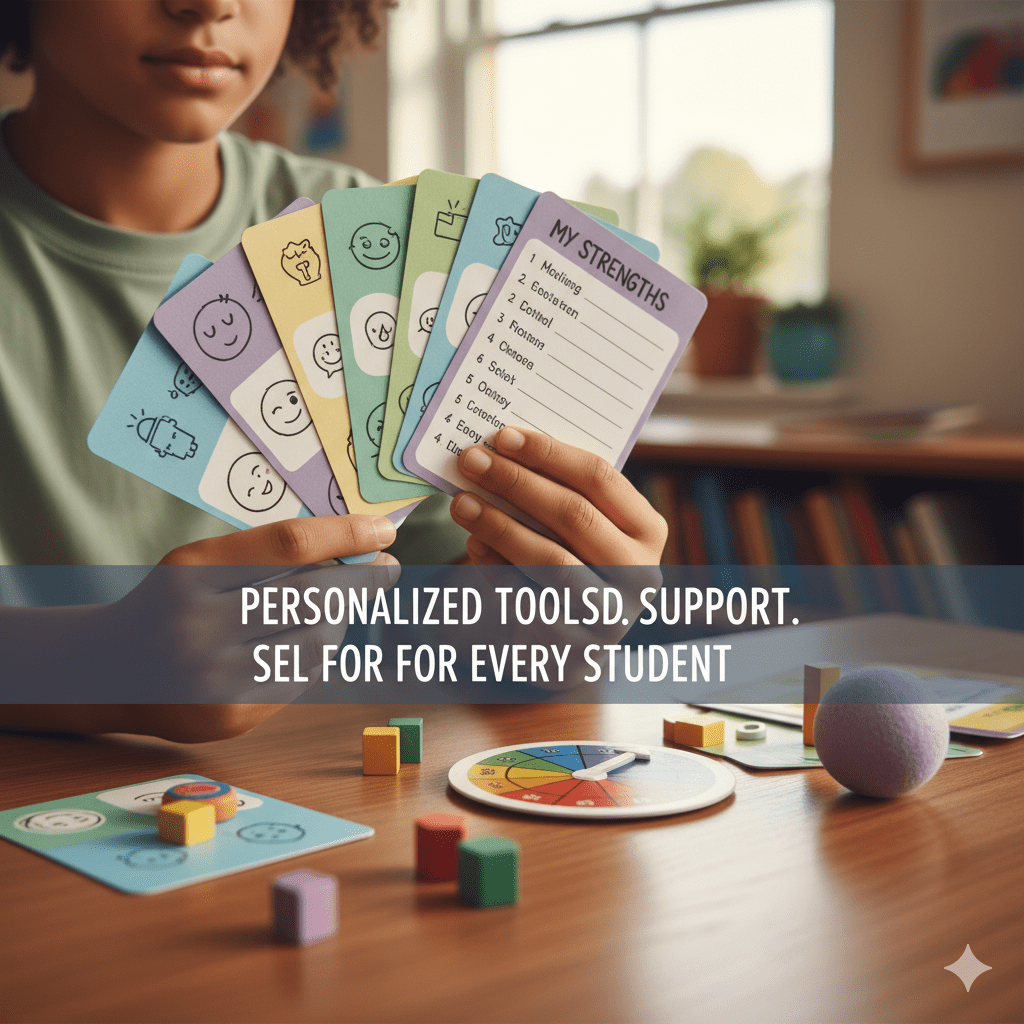
Here’s what I’m committing to: building individualized resources for students that help them succeed throughout their entire day.
Not generic strategies. Not one-size-fits-all solutions. Personal toolkits that students co-create with me, own completely, and can use independently.
I want to shift from being the person everyone calls in crisis to being the person who helps students and teachers prevent those crises. I’ll still be there for intensive support—that’s my expertise and my passion. But I want to multiply my impact by helping students develop their own regulation skills.
The goal isn’t fewer crisis calls because I’m avoiding the work. It’s fewer crisis calls because students have grown and teachers have built stronger relationships with them.
Starting Small, Thinking Big
My first step is simple: help each student identify one area to focus on. Not everything that’s challenging them—just one thing that, if it improved, would make the biggest difference in their day.
Then we’ll build from there. Visual cues they can carry. Self-regulation strategies that they can practice. Tools that travel with them from classroom to classroom, helping them navigate transitions and tough moments with confidence.
Why This Matters to Me
I’ve realized that my real expertise isn’t just in crisis management—it’s in seeing what each student needs and helping them discover what works for them.
That’s not something you can put in a handbook or teach in a workshop. It’s relational work. It’s collaborative work. It’s the kind of work that changes lives.
Students with SEL needs don’t just need support—they need to feel empowered. They need to know they have tools, strategies, and skills they can count on. They need to experience success that they’ve helped create.
This year, I’m not just supporting students. I’m helping them support themselves. And that’s work worth my time, energy, and creative heart.
My Commitment
By our final face-to-face meeting, I want to see students using their personalized tools without prompting. I want to see teachers noticing fewer crisis moments and more student growth. Most importantly, I want to see students feeling proud of their own progress. This is my focus. This is my action plan. This is how I’m choosing to make a difference this year.