 Written by
Leading up to the second F2F I had thought that I would focus my action plan on blended learning, since I am currently on the team for a blended learning pilot of Careers and the IB Personal Project at my school. Holding on to this idea while going through the design thinking journey was like holding onto a balloon by its thread while white water rafting. I had to let go, and the question I was ultimately led to was applicable but not necessarily specific to my blended learning context:
How might we scaffold research skills to create a meaningful self-directed learning experience?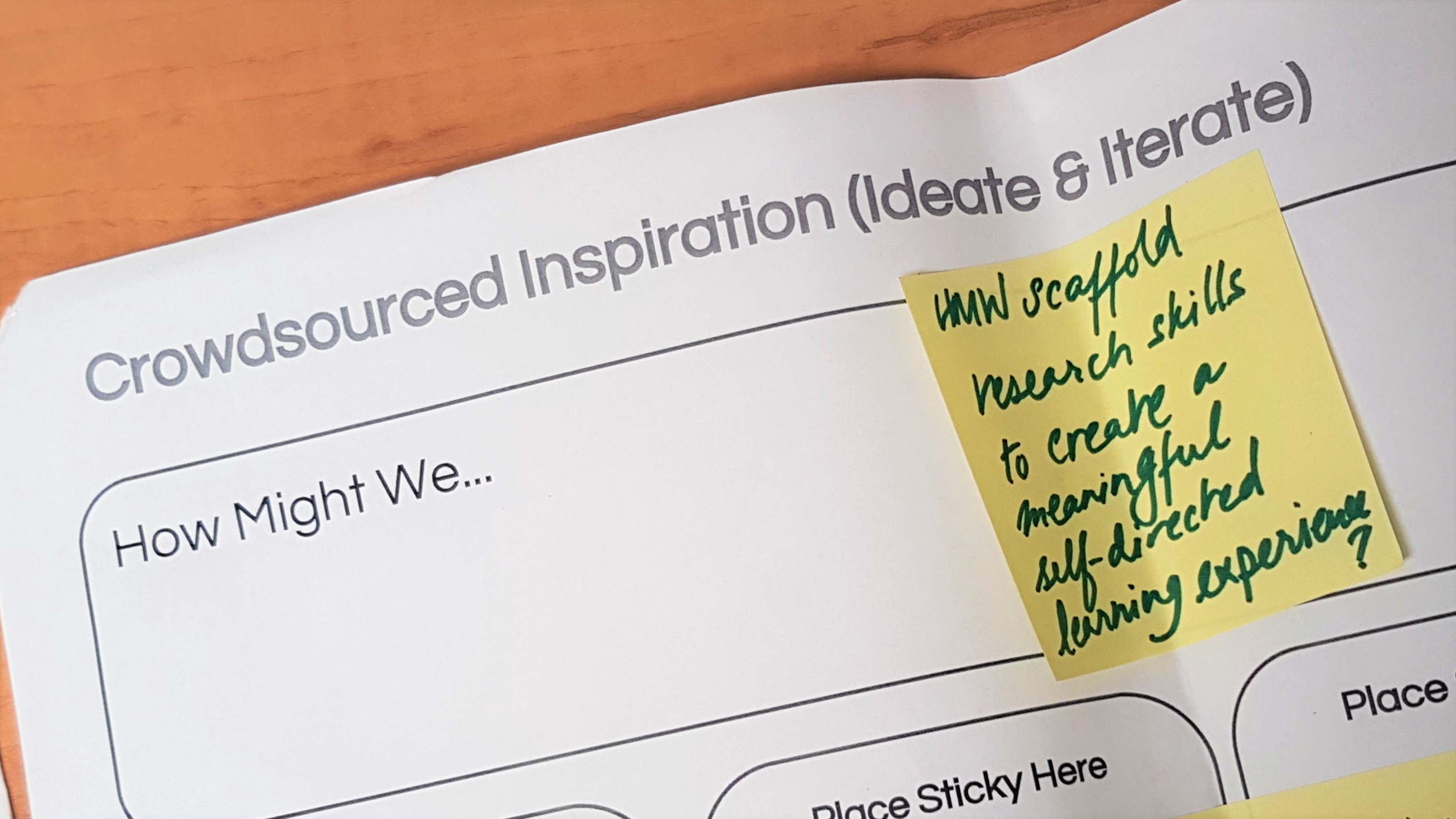
The second F2F on Saturday, November 18th, came right on the heels of the 2017 Fall Conference of Independent Schools Ontario Librarians’ (CISLIB) Fall Meeting that happened on Friday, November 17th and which was an equally intense day of energizing exchanges (@lmustard, @nbrooksbank and @sneesham were there!). It took a while to digest and synthesize the flood of ideas, information and inspiration of these two days amidst being mired, both before and after, in the challenges and chores of the workaday school day. How does this all piece together? Answering this question called for stepping back and getting back in touch with one of the key guiding questions framing my educational philosophy that’s been best articulated by Grant Lichtman in Edjourney, a book that has deeply impacted my perspectives as an educator (thanks @gnichols for the recommendation):
What is a school’s purpose in a time when the acquisition of content knowledge is in the student’s pocket?

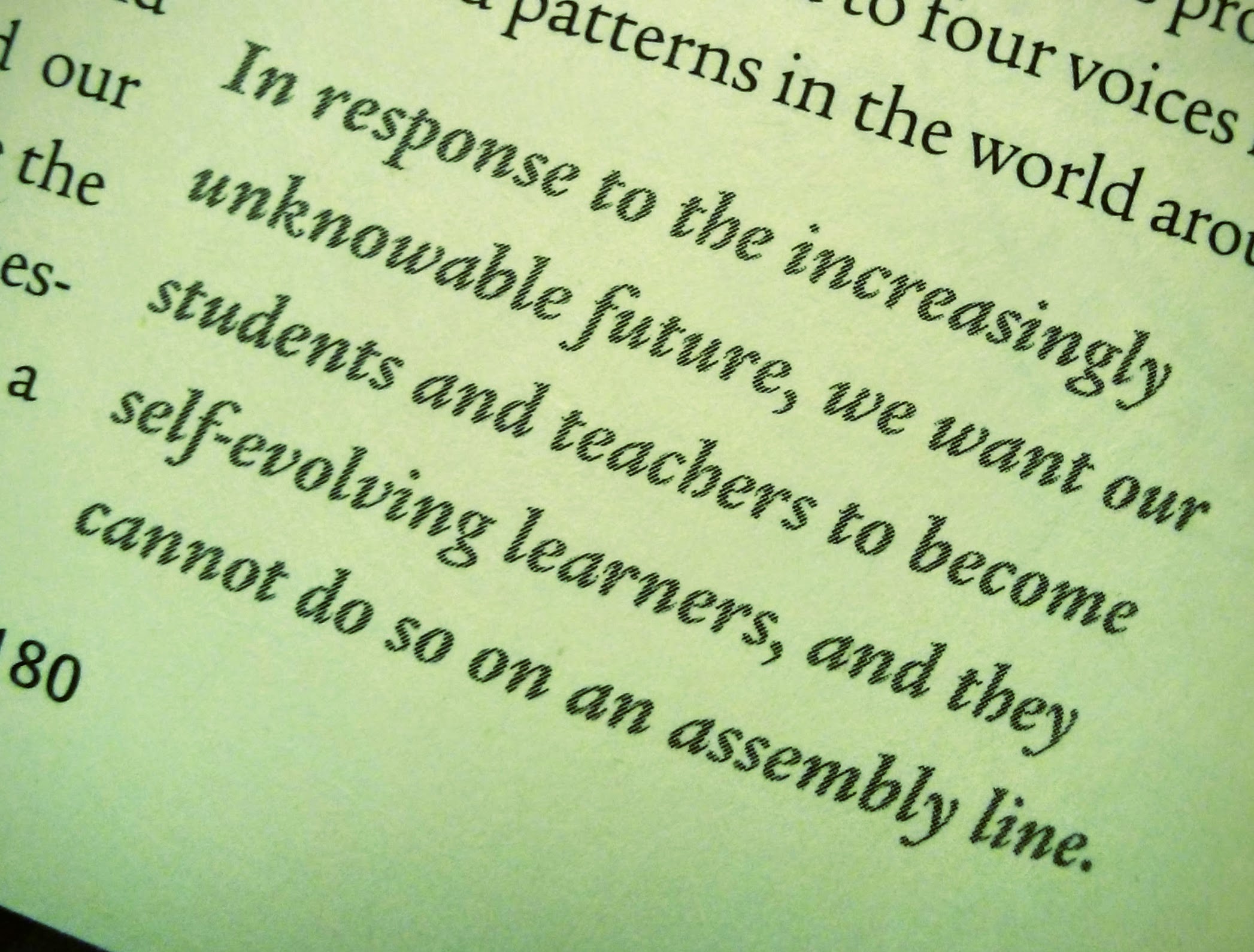
And an important part of Lichtman’s answer to this question is that schools need to be helping students and teachers become “self-evolving learners,” a concept and phrasing that captures so much that it took some courage to dare to make it part of my revised HMW question, which is now…
How might we scaffold information literacy skills to foster self-evolving learners?
If scaffolding is part of the solution then what is the problem, exactly? In the problem statement Mad Libs stage of the process I came up with three articulations:
- Students need to feel that they can trust teachers because, especially when it comes to research projects, teachers often assess students on skills they have not taught them.
- Teachers need clarity and something easy to work with when it comes to teaching research skills because they already have a lot of curriculum to cover in their subject areas and if it is unclear what to teach in terms of research skills and/or unwieldy to integrate research skills related learning outcomes then these skills become of secondary importance.
- Librarians also need clarity and something easy to work with when it comes to teaching research skills because this would make collaboration with teachers easier. (see @nbrooksbank ‘s post How to Connect to get a sense of why it’s hard)
Reflecting on these insights in light of my reworked HMW question, I found the direction of my solution changing and the new direction was inspired by one of the crowdsourced ideas: vertical planning.
Vertically planning the developmental progression of information literacy skills is an existing solution to the problem of teaching these skills and it’s in the form of a research scope and sequence. My innovation challenge, as I see it at this point in time, is how I might achieve the vertical integration of info lit skills without imposing another curriculum document that is the research scope and sequence on teachers. To this end, one idea that I have been exploring is one that emerged from the CISLIB meeting I mentioned earlier. The CISLIB meeting featured an exciting long-awaited conversation between secondary and post-secondary librarians where one of key points of discussion was the ACRL (Association of College and Research Libraries) standards, which have undergone a revision such that they are no longer in the form of a curriculum but six concisely phrased (cryptic, almost) big ideas that come with a short explanation and a set of knowledge practices and dispositions.
Authority Is Constructed and Contextual
Information Creation as a Process
Information Has Value
Research as Inquiry
Scholarship as Conversation
Searching as Strategic Exploration
What if vertically planning the integration of info lit skills involved not another curriculum document but the weaving in of six big ideas? Arguably, not all of them need to be integrated either at every grade level or in every subject area, so the intention is to go deeper with lesser. I am aware that while this might address the need for ease of access for teachers, it might not address the need for clarity as the six ideas need deciphering even for professional librarians. I see this problem as an opportunity. If the way forward in the age of unprecedented access to information (content knowledge) is to have both teachers and students be “self-evolving learners” then perhaps having teachers co-learn with students the implications and skills associated with these ideas is the way to go. How that might be facilitated is the stuff of action items for this goal and involves, for starters, meeting and discussing the idea with admin and colleagues (meetings that I have booked on my Outlook calendar as manifest action items).
I am well aware that all of this may very well be another, bigger, balloon that I will have to let fly into the sky in the wonderful white water raft ride of the upcoming F2F.
@sgupta I think this is a worthwhile and important action plan. However you are right in thinking that is a long term action plan. To give you some context it took me two school years to pull together all the people and players to make this happen: https://docs.google.com/document/d/e/2PACX-1vR20qPkDuL7pandiP1CFhcLwr7JMSIiST_BCqrcrKO5h1GL1DRHPuWl2j_kL4fy1H065M82O7I_IxCL/pub
It was a whole school project and that involved LOTS of census building and discussion. So worth it but it did not get done in an afternoon meeting. Happy to talk further at the 3rd face to face. @saraspencer was a big part of making it happen.
@jmedved , thank you so much for sharing your thoughts on my action plan and for the Research Scope & Sequence document. My change in direction since the 2nd F2F came after a few considerations. While I am aware & wary that this is a long-term whole-school undertaking, I also think at this point that it is the most meaningful. I’m treading with trepidation for sure. Looking forward to chatting further on Friday!
Hi Samhita,
Grant Lichtman recently visited our school and gave our staff a lot to think about. : ) It’s an exciting time for change. I think the role of the teacher-librarian is going to become more and more important with the changing roles of students and teachers. Meeting with your colleagues and admin is a great first step!
@kdavis , I’d love to hear more about what Grant Lichtman talked about at your school. So cool that you had him visit!
Wow Samitha! Great blog entry. I think teacher training for deeper understanding and becoming self-evolving learners will be forever ongoing.