 Written by
Navigating hyphenated identity. Story of my life.
As an Indian-Canadian who has found her professional niche as teacher-librarian, the question “What do you do?” has become almost as daunting as “Where are you from?”. When I tell people I’m a teacher-librarian, responses include…
“So, you teach librarianship?” (No.)
“So, you teach in a library?” (Sometimes.)
“So, are you a librarian or a teacher?” (Both.)
“So, you’re a teacher and a librarian?” (Yes.) “So, you work two jobs?” (No.)
In most cases, there is a problematic follow-up question…
“So, what do you teach?”
It’s problematic for me because it’s a question that speaks to the idea of a teacher being defined as a teacher of something. I teach research and academic honesty, I tell them. But because these usually comprise a lesson or a segment, and aren’t established subjects or courses (in K-12 at least), what I teach doesn’t do much work for defining me as a teacher, either to myself or to others.
While I sometimes wish it did, being a teacher, to me, has never been tied to what I wanted to or was qualified to teach. It has been rooted in my experience as a learner, and libraries were where I found myself as a learner. I remember getting hooked to sketching portraits in Gr. 11 art. That summer I signed out books on portrait sketching from the public library–this was before the present-day ubiquitousness of the Internet, which you can think of as a ubiquitous library (subject of another post)—to help me further develop my skills and secretly draw a portrait of my mother that I gave her for her birthday. As a student of English and Philosophy in university, I can’t imagine how I would have made my learning my own relying only on required readings. As institutions based on the principle of making learning accessible so people can pursue their curiosity, libraries are more closely associated than schools are with authentic and self-directed learning, which, at core, is the reason why I’m a teacher. So, being a teacher-librarian to me means being someone who holds that library-spirited approach to learning and hence to teaching.
Fittingly, the course I’m on the teaching team for this year is about students’ self-discovery and self-directed learning experiences. It’s a blended learning pilot of offering Careers through Project-Based-Learning where the project is the IB MYP Personal Project. The revelation that’s emerged through this experience has been that my life involves more hyphens than I thought it did. (And I’m sure yours does too.)
Thinking of hyphens as two distinct things coming together (often, and especially in this case, coming up against each other) asking for synthesis, here are the various things that–they’re not exactly juxtaposed–are hyphenposed (yes, I coined that word and I refuse to hyphenate it) in my blended learning course:
Physical classroom learning–Online Learning
Careers–Personal Project
Curriculum-driven–Inquiry-driven
Ministry requirements–IB requirements
Student-directed–teacher/curriculum-directed
If I have learnt anything from navigating all the hyphens in my life, it is that to get above the tension you have to first get down to the roots. Then you graft roots and let the synthesis grow to give you something new.
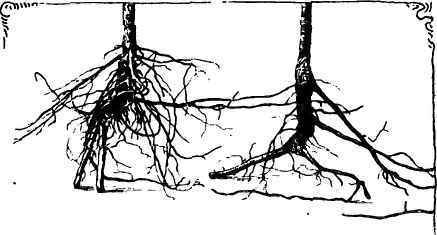
I am looking forward to grafting and synthesizing my blended learning hyphenpositions into innovations with the support of Cohort21’s community and guidance. And I would love to hear about the hyphens you navigate!
Welcome aboard @sgupta ! You have found your tribe where you can explore many of the ideas you have been wrestling with. In the spirit of grafting and connecting… I would like to introduce you to all of the C21 librarians who have gone before you. I will tag them in this comment and hopefully you can do the same when you have a question to idea to share.
@thutton @saraspencer @lmustard @chazzard @jweening @sneesham @nbrooksbank
Thank you @jmedved! I’m excited to connect and reconnect with everyone you mentioned 🙂
Great food for thought, Samhita!
You highlight a few interesting points that resonated with me. First, the idea that your identity as a teacher has been rooted in my experience as a learner, not by what you are “qualified” to teach. I think that this is what truly makes a great teacher. Although it flies in the face of much research that shows that great teachers are experts in their field of study (ie they have a Masters degree in their teachable subject), I firmly believe that what truly makes a great teacher is a love of learning and the ability to empathize with our students. It’s not what we teach, so much as how we teach it.
I also find myself in the company of hyphens. In our work at Future Design School, people are always looking for us to define what we teach. It’s Project-Based Learning–Design Thinking– Inquiry–Computational Thinking–Student-Directed–Whatever Buzz Word Is Next — but at the heart of what we are focusing on is: What makes good teaching and learning? Call it what you will, we just call it engaging students in developing skills they need to thrive in the future. People often want to name things, to categorize and itemize approaches, but I don’t see a hard line between these things – it’s all connected like your root image. Maybe this is why so many of the teachers we work with are teacher-librarians?!
Looking forward to reading more of your reflections.
Les
Les, thank you so much for taking the time to engage with my post! Yes, it’s so important to articulate and leverage the connections between all these itemized approaches. My intuition is that’s the route to enduring innovation. But it’s easier said than done, of course. I would love to learn more about the work FDS is doing now (especially around genius hour)!
@sgupta,
We are all navigating hyphens or dashing-to-and-fro. I love it. Great concept, great visual diversity learning opportunity. Also, I truly believe that originality is found through hybridization. May you find your inner-hybrid at Cohort21.
E.B. Daigle (Learning-Experience-Designer)
Eric, thank you! I love the pun on dashing. Yes, I’m with you on hybridization–it’s an art unto itself. 🙂
@sgupta Very cool post, my friend! I have never thought about what we do in those terms before but I will now. I look forward to catching up with you on Saturday (and Friday for that matter!) – I’d love to hear how you’re navigating some of the tensions in the hyphens, in particular between curriculum and inquiry and classroom and online. Can’t wait to see where you go with this!