How Might We….Student Voice in Differentiation
Design Thinking Action Plan: Student Voice in Differentiation
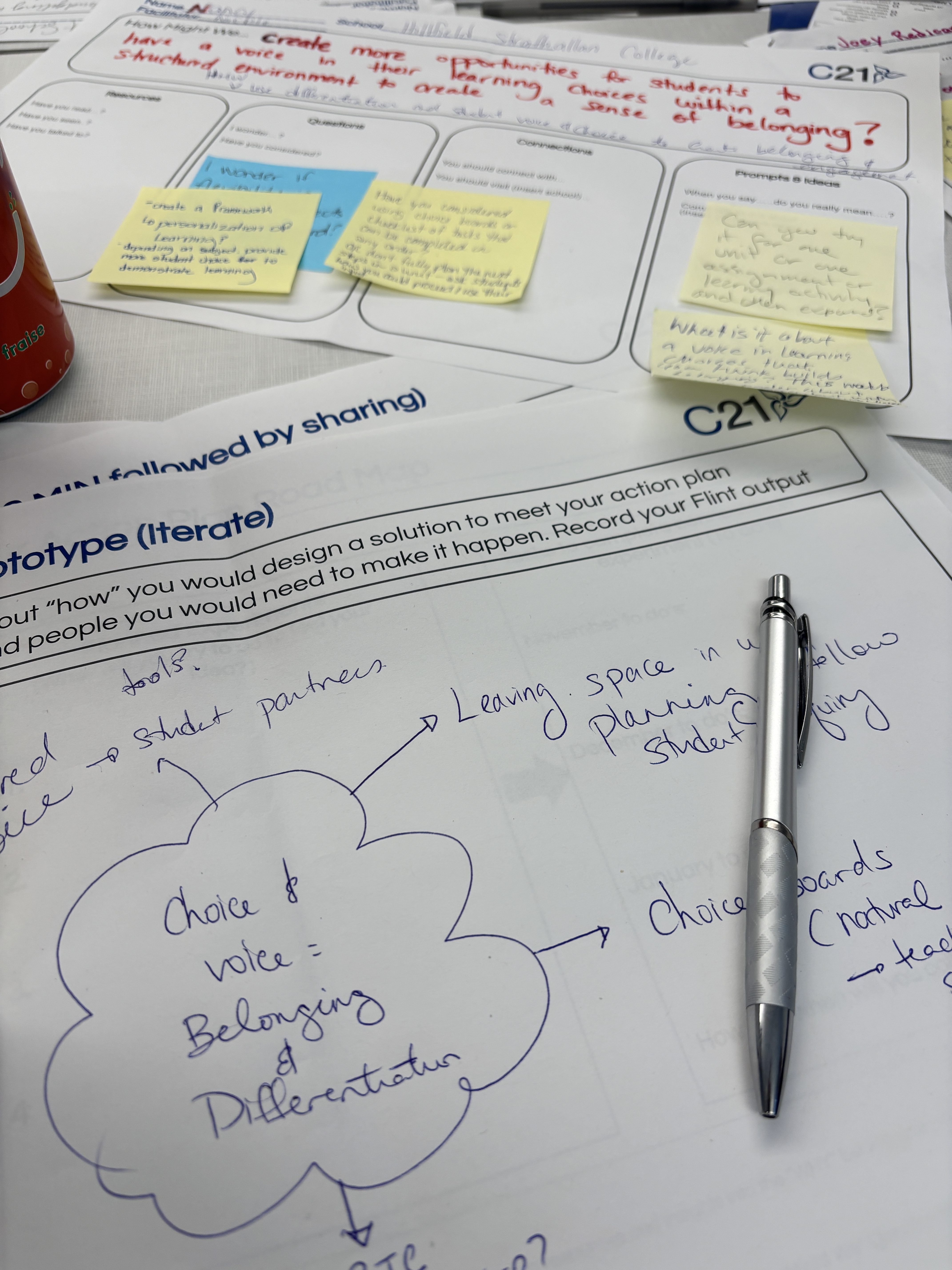
HMW Question: How might we use differentiation and student voice and choice to create belonging and engagement within rigid programming constraints for grades 1-4?
The Challenge
Current state: Teachers direct all differentiation and activity selection for students.
Desired state: Students make informed choices about their learning pathways while still receiving differentiated support matched to their needs and ability levels.
Key insight: Students need self-awareness about their own learning to make good choices—they must be able to identify when they need more support versus when they’re ready for challenge.
The Solution: Try-Reflect-Adjust with Feedback
Rather than teacher-directed differentiation, implement a student-centered feedback loop:
- Try: Students select from differentiated options on a choiceboard
- Get Feedback: Peer observation or exit ticket reflection
- Reflect: Students assess: “Was this the right challenge for me?”
- Adjust: Students refine their choices for next learning cycle
This cycle builds both competence (students learn to self-assess) and belonging (students have agency in their learning).
First Experiment: Grade 1 Place Value (Week 1)
What You’ll Do:
- Design a place value choiceboard with 2-3 differentiated task options (e.g., concrete manipulatives, pictorial representations, symbolic notation)
- Students choose their starting point based on where they think they need to begin
- Gather feedback via peer observation or quick exit ticket
- Facilitate end-of-lesson reflection: “Was this the right challenge for me? What will I choose next time?”
Why This Works:
- Fits within rigid time blocks—no extra time needed
- Maintains curriculum fidelity (still teaching place value)
- Builds student metacognition and self-assessment skills
- Creates belonging through choice and agency
- Generates data (feedback/reflections) to inform future differentiation
Actionable Steps: December 2025 – April 2026
December 2025:
- Design and test your first place value choiceboard
- Implement Week 1 experiment with Grade 1
- Collect feedback and student reflections
- Reflect: What worked? What surprised you?
January 2026:
- Refine the choiceboard based on student data
- Expand to creative arts pilot (same try-reflect-adjust structure)
- Begin building student language around self-assessment (“I need more practice,” “I’m ready for a challenge”)
February 2026:
- Deepen the feedback loop—train students to give peer feedback
- Expand choice to 1-2 additional math units
- Document student growth in self-assessment skills
March 2026:
- Integrate student choice into more subjects/times
- Reflect on belonging and engagement data (observations, student voice)
- Identify barriers and problem-solve with colleagues
April 2026:
- Celebrate learning and student growth in agency
- Document lessons learned and share with your school community
- Plan next iteration for next school year
Key Takeaway
You’re not abandoning differentiation—you’re making students partners in it. By building their capacity to self-assess and reflect, you create an environment where belonging and engagement emerge naturally because students have voice, choice, and the skills to make good decisions about their own learning.
 Start small. Start with place value. Start this week. 🚀
@nhanna, great post! I really like your “Desired state: Students make informed choices about their learning pathways while still receiving differentiated support matched to their needs and ability levels.” The blend of student voice and teacher support is the true secret sauce for this path. I look forward to chatting to you more about how this project is going on your end tomorrow!