

Design Thinking in Action!: Action Plan
 Tonika Dunn
Design Thinking in Action: Building a Sustainable Executive Functioning Framework
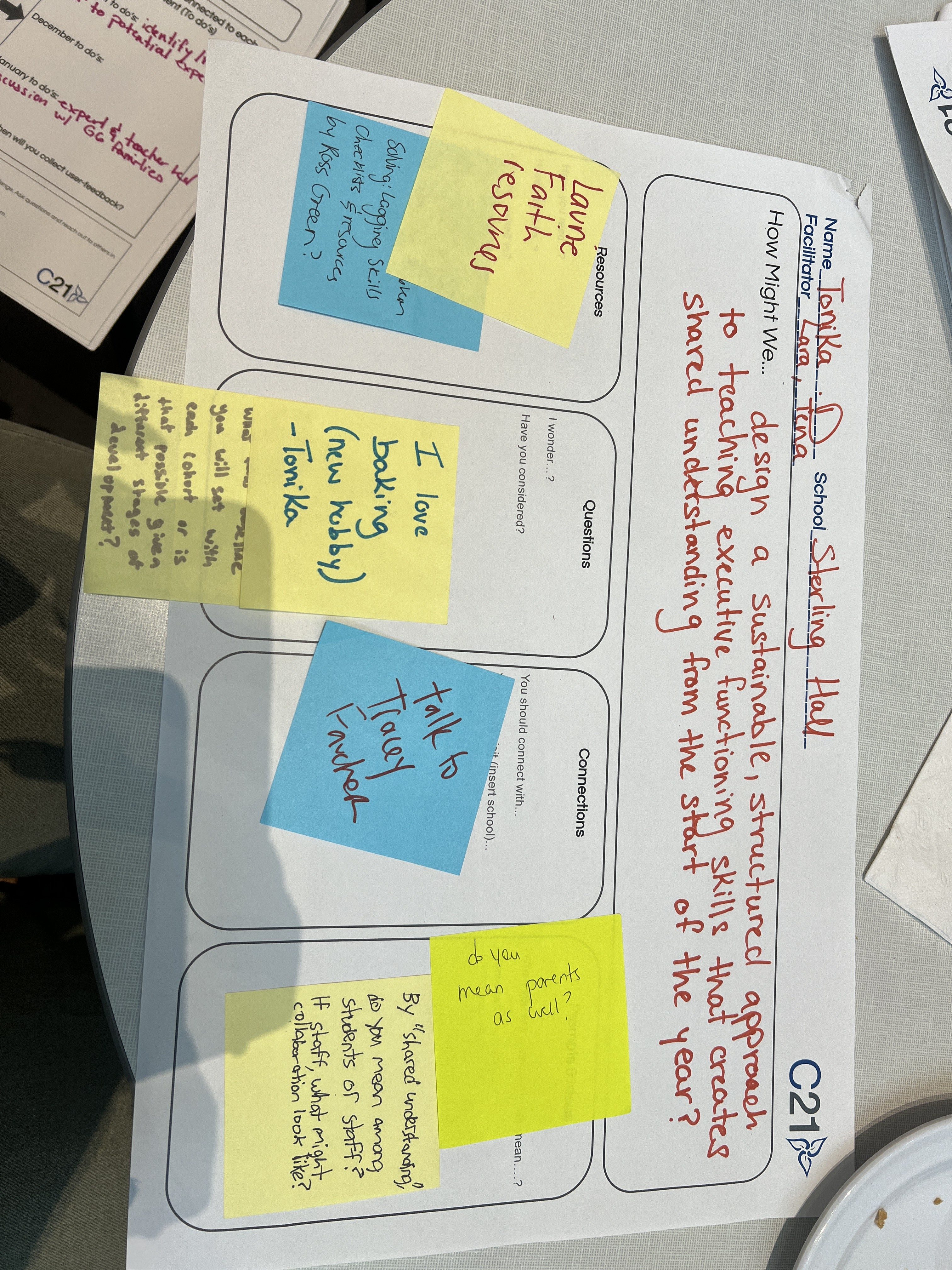
My question: How Might We Design a Sustainable, Structured Approach to Teaching Executive Functioning Skills That Creates Shared Understanding from the Start of the Year?
The Challenge
As educators, we know that executive functioning skills—organization, planning, self-regulation, metacognition—are foundational to student success. Yet too often, these skills are taught in isolation, without a coherent school-wide framework or genuine partnership with families. At our school, we asked ourselves: How might we create a unified, research-backed approach that aligns teachers, engages families, and empowers students to understand their own learning?
Our Vision
We envision a school culture where:
Teachers (new and experienced) operate from a shared understanding of current research on supporting diverse learners, particularly students with ADHD and processing disabilities
Students become front-seat learners, developing metacognitive awareness of what they do, why they do it, and how it connects to their independence and resilience
Families move from compliance to genuine partnership, understanding the research-backed why behind our approach and how they can reinforce these skills at home
Our school pedagogy—fostering boys’ independence, confidence, and resilience—becomes the through-line connecting everything
What We Learned Through Design Thinking
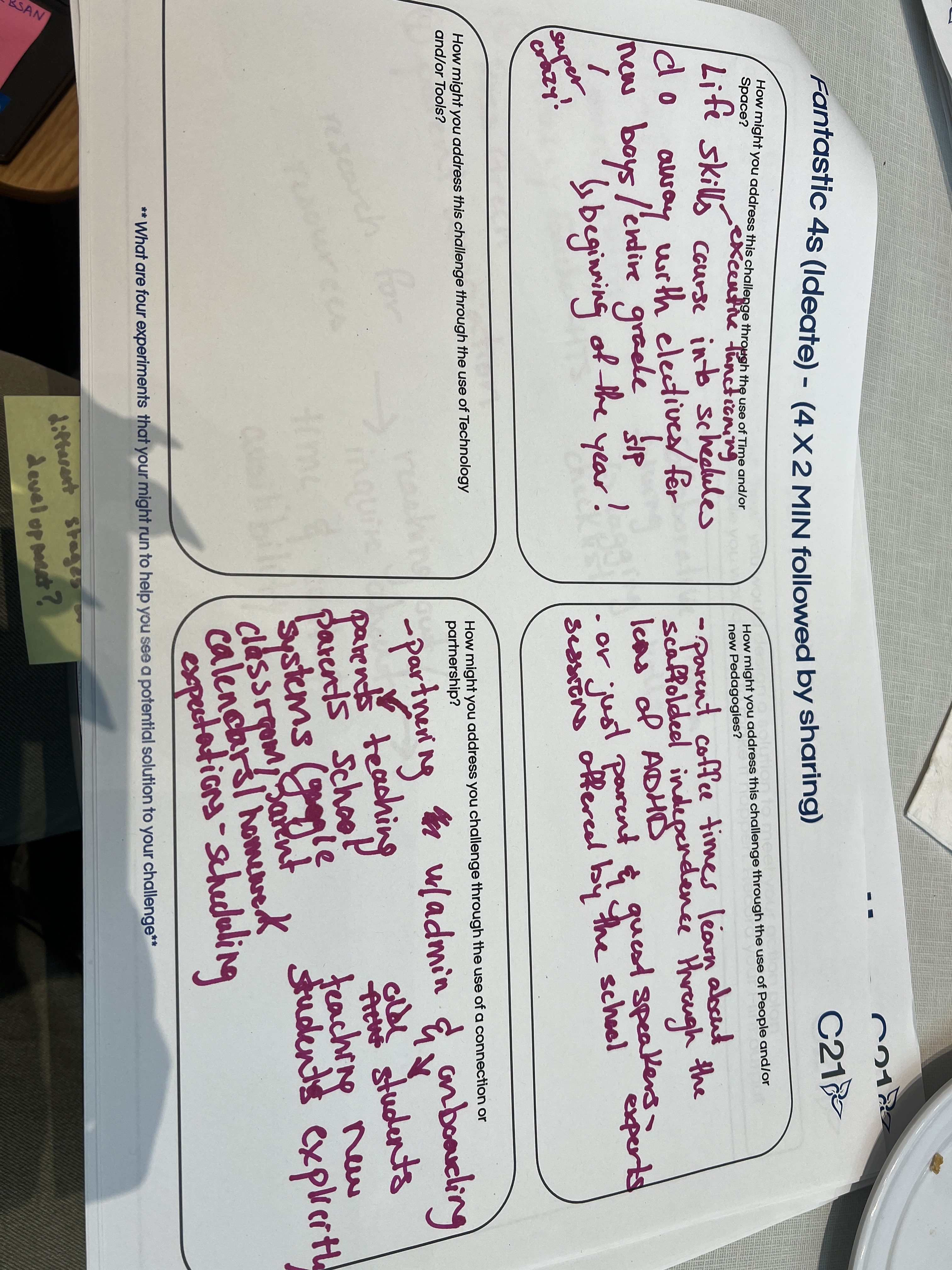
Through iterative dialogue and questioning, we uncovered critical insights:
1. Parents Respond to Presence, Not Emails
Traditional communication channels often get lost. Families engage most meaningfully through in-person conversations, coffee meetings, and structured discussions where they can ask questions and build genuine understanding.
2. Onboarding Moments Are Golden Opportunities
Meet the Teacher nights, parent-teacher conferences, and new family orientations are when families are most receptive and engaged. These are our leverage points for establishing buy-in from day one.
3. Expertise Matters
Bringing in a guest speaker or learning specialist who can speak authoritatively about the research and data around executive functioning and diverse learning needs adds credibility and depth to our conversations with families.
4. Differentiation Takes Time
Students with varying learning needs—particularly those with ADHD or processing disabilities—require patient, differentiated support as they learn new routines and expectations. This is a barrier, but also an opportunity to model the very skills we’re teaching.
Our Action Plan: December 2025 – April 2026
Immediate Priority (December):
Identify and connect with an expert resource person (learning specialist, educational psychologist, or executive functioning specialist)
Confirm their availability for our January pilot
January Pilot:
Host an after-school discussion talk with Grade 6-7 families
Feature our expert guest speaker alongside teacher facilitators
Focus: Research on executive functioning + connection to boys’ independence and resilience + practical home strategies families can use
Gather feedback on clarity, relevance, and parent understanding
February – March:
Refine messaging and approach based on pilot feedback
Integrate refined conversations into Meet the Teacher nights and new family onboarding sessions
Ensure consistency in how all teachers communicate the why behind our executive functioning framework
April – Reflection & Planning:
Evaluate: Did families show increased buy-in? Did teacher alignment improve? What needs adjustment?
Document learnings and successes for full implementation in August
Plan for scaling across all grade levels and touchpoints
Why This Matters
Executive functioning isn’t just about getting organized—it’s about helping our students develop the independence, confidence, and resilience that will serve them throughout their lives. When teachers, families, and students all understand this shared purpose and work together, the impact multiplies exponentially.
By grounding our approach in current research, creating genuine family partnerships, and maintaining consistency across our school community, we’re not just teaching skills—we’re building a culture of learning and growth.
What’s Next?
The work begins now. We’ll reach out to our expert resource, finalize our January pilot, and begin the iterative process of refining and scaling this framework. This isn’t a one-time initiative; it’s a sustainable, evolving approach that will continue to improve as we learn from our families, students, and colleagues.
We’re excited about the possibilities ahead. 🚀
See cool pics of my planning below! 😀

Hi Tonika!
I’m excited to hear more about how this is going! It’s such an important topic and I’m sure those of us in middle school would be curious to see how it’s going. Just curious – has there been any resources or PD made available for teachers? As a specialist teacher, sometimes we get forgotten in these conversations as it centres around homeroom but we want to be a part of it too as it matters across all subjects. Can’t wait to hear more about it next week!