Peer Mentoring Pilot Program Progress
Introduction: A Question Worth Exploring
When I joined my school community this year, I was struck by the energy and commitment across both our lower and upper school campuses. That observation sparked a question: How might we implement a structured peer tutoring program that strengthens younger students’ math competence and cultivates high school students’ mentoring abilities, while fostering cross-campus connection?
This question felt important to me because I believe that schools are at their best when they function as true communities. Ones where students see themselves as part of something larger than their own grade level. I wanted to explore whether peer mentoring could be that bridge. Could upper school students, by stepping into a teaching role, develop greater confidence and leadership? Could lower school students benefit from personalized academic support and the inspiration of seeing older peers invested in their growth? And perhaps most importantly, could this work create a tangible shift in how we think about community connection across our campuses?
This spring, I decided to find out.
What I Did & Its Impact
The Pilot Program
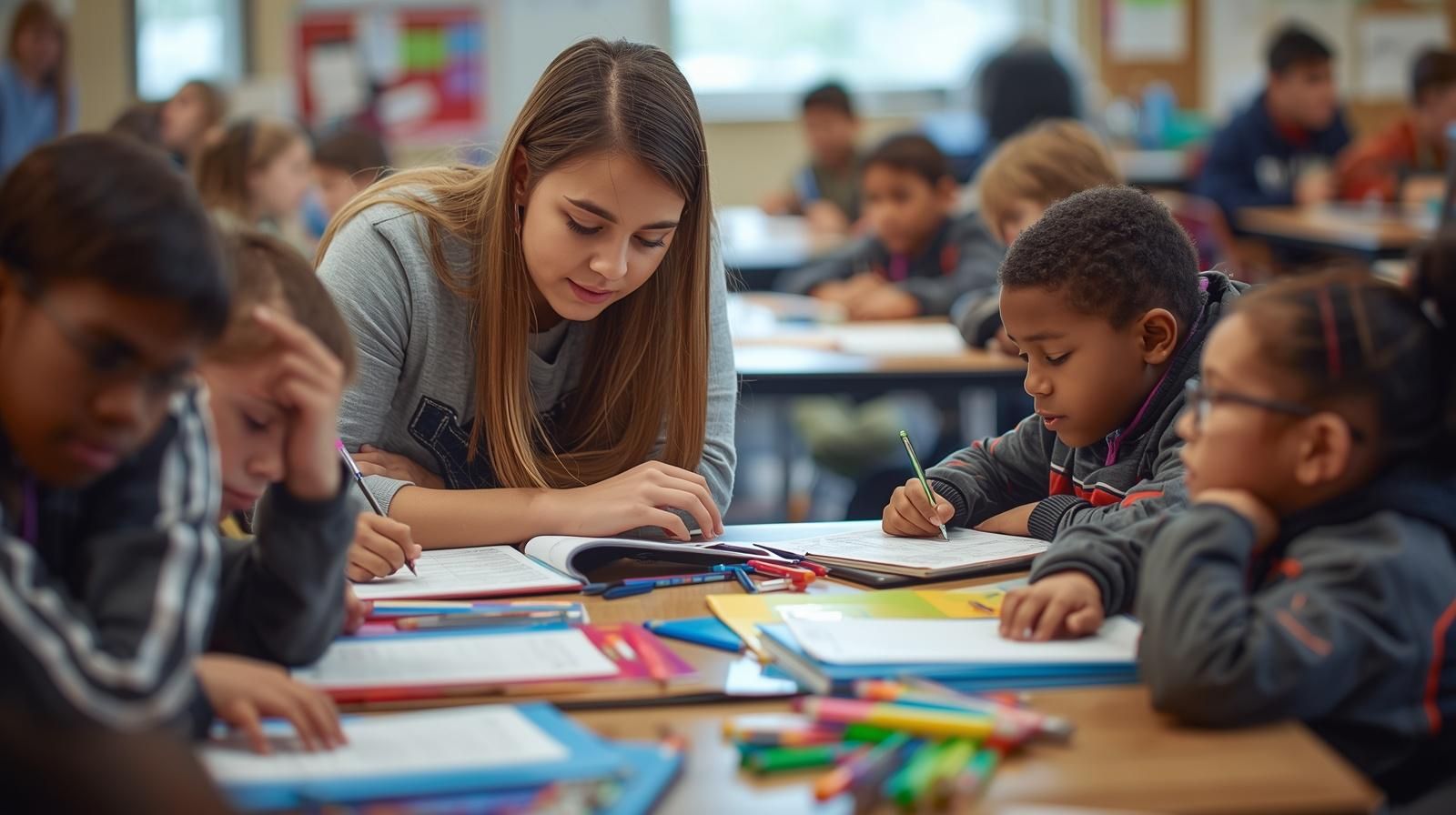
In April, I launched a 6-week peer tutoring pilot program focused on mathematics. The design was intentionally lean, as I wanted to test the concept without overcomplicating it. I recruited upper school students who had expressed interest in mentoring and paired them with lower school students who wanted additional math support. The response was encouraging: I had strong interest from both campuses, with enough mentors and mentees to create a meaningful cohort.
Before the program launched, I facilitated training sessions for all peer mentors. These sessions covered foundational tutoring strategies, how to ask effective questions rather than simply providing answers, techniques for building student confidence, and how to create an emotionally safe learning space. I also addressed the unique dynamics of cross-campus mentoring and how to bridge any age or social gaps.
What the Numbers Tell Us
Over four weeks, the outcomes were genuinely encouraging. Lower school students demonstrated measurable improvements in mathematical understanding, with many gaining confidence in concepts they’d previously struggled with. But the growth I noticed in the mentors themselves was equally striking.
The peer mentors showed significant confidence growth throughout the program. More importantly, I noted how consistently they applied the training strategies we’d discussed. What I found was compelling: mentors increasingly implemented the techniques they’d learned, asking more probing questions, offering specific praise, and adjusting their explanations based on student understanding, with each passing week. This wasn’t just participation; it was genuine skill development and application.
The Goldilocks Ratio
One of my most practical discoveries was about group size. I experimented with different tutor-to-student ratios and found that a 2:1 ratio (two students per mentor) proved ideal. This size allowed mentors to give personalized attention while also creating peer interaction and collaboration between the two students. However, I also learned that 1:1 pairings worked beautifully for students who needed more intensive support, and 3:1 groups were workable when mentors had strong facilitation skills. The key insight: there’s no one-size-fits-all answer, but intentionality about group composition matters enormously.
Strong Participation and Reception
Perhaps most validating was the participation rate and feedback. Attendance was consistently strong, mentors showed up prepared and engaged, and lower school students actively looked forward to sessions. The program felt genuinely valued by both groups. This wasn’t something I had to cajole people into. Instead, it was something they wanted to be part of.
What I Learned
The Confidence Question
One challenge emerged early: several mentors were nervous about working with small groups, particularly in the first week. Some worried about whether they’d be “good enough” at teaching, whether they could handle questions they didn’t know the answer to, or whether younger students would take them seriously. I watched this unfold with interest, and here’s what happened: by week two, most of these concerns had largely dissolved. The mentors realized that they were capable, that students respected their effort and honesty, and that the vulnerability of not knowing everything was actually an asset, not a liability. This shift was powerful to witness.
This taught me something important about training and support: good training matters, but it’s not a substitute for real experience. The slides and strategies I taught were valuable, but the real confidence-building happened when mentors actually showed up, tried something, and discovered they could do it. The training created a foundation, but experience built the structure.
The Calendar Conundrum
A recurring friction point was scheduling. The lower and upper school campuses operate on different calendars, with different lunch periods, different dismissal times, and different activity schedules. Coordinating sessions required constant communication and flexibility. This taught me that cross-campus collaboration requires visible, shared calendar systems. If we scale this program, we need administrative support to create scheduling infrastructure that doesn’t rely on individual problem-solving.
Support Systems Matter
I also realized that mentors need more intentional training and relationship-building with supervisors. While mentors had access to supervisor support, they didn’t always feel comfortable reaching out or asking for help in the moment. They needed to build trust and familiarity with their supervisors so that asking questions felt natural and safe. This taught me that access to support isn’t enough. Mentors need to be actively trained and encouraged to use it, and they need to develop relationships with supervisors that make them feel confident asking for guidance. This isn’t a minor detail; it’s essential infrastructure for any peer mentoring program.
The Bottom Line on Effectiveness
Despite these logistical challenges, the program works. Students benefit academically, mentors grow in confidence and leadership, and the bridge-building happens organically. This is worth investing in more intentionally and systematically.
Resources to Share
Because I believe in the replicability of this work, I want to make it easy for others to build on what we’ve learned. Here’s what I’m offering:
- Mentor Training Slide Deck: A complete training presentation covering tutoring strategies, emotional intelligence, group management, and cross-campus dynamics. This is ready to adapt and use.
- Actionable Recommendations for Other Schools: Specific, practical suggestions based on what worked and what we’d do differently next time.
All of these resources are available, and I’m happy to share them with anyone interested in launching a similar initiative.
The Big Takeaway
Here’s what I’m most convinced of after this pilot: Building bridges between our school’s campuses is worth the commitment it requires.
Peer mentoring and cross-grade collaboration are transformative. They shift how older students see themselves (as capable leaders and teachers), how younger students see possibilities (through the living example of older peers), and how the entire school community functions. When a tenth grader helps a sixth grader understand fractions, something bigger happens than math tutoring: a connection forms. The school feels smaller, more cohesive, more human.
This pilot has fundamentally shifted how I think about community and connection. It’s moved me from seeing our two campuses as separate entities to seeing them as parts of a single ecosystem that thrives when they’re intentionally linked.
Lingering Questions & Next Steps
Of course, this work isn’t finished, and I don’t think it should be. A few challenges remain, and they’re worth naming honestly.
The Commitment Challenge
One significant hurdle is sustaining upper school participation, particularly from grade 11 and 12 students who’ve already completed their volunteer service hour requirements. Once that external motivation is gone, how do we keep mentors engaged? This is the question that keeps me thinking.
My Plans for Next Year
To address this, I’m planning to:
- Formalize with an application process: Treat peer mentoring as a selective opportunity, not just an open call. This creates intentionality and signals that it’s valued.
- Analyze costs and logistics: Get clear numbers on transportation, scheduling, and resource costs, so we can build a sustainable budget model.
- Explore meaningful incentives: Beyond service hours, consider what genuinely motivates our upper school students. Is it school spirit wear, volunteer hour recognition, or leadership certificates?
- Build a vision for scale: Move from a 4-week spring pilot to a more robust program that could run throughout the year, potentially expanding beyond math to other subjects.
The foundation is solid. Now, it’s about building the structure to sustain it.
Final Thoughts: Professional Growth and Authentic Leadership
This Cohort 21 journey has been about more than launching a peer mentoring program. It’s been about developing myself as a leader who thinks systemically, acts intentionally, and commits to sustainability.
When I started, I had a question and an intuition. Through this process, I’ve learned to test that intuition rigorously, to gather evidence, to listen to what the data tells me, and to think beyond the immediate pilot to the systems that would make this work at scale. I’ve learned that good ideas aren’t enough. They need infrastructure, support, and intentional design.
I’m leaving this cohort with a deep commitment to this work and a clearer vision of what authentic leadership looks like: it’s not about having all the answers. It’s about asking the right questions, being willing to learn from what you discover, and building systems that allow good work to sustain itself.
The bridges between our campuses are beginning to form. And I’m excited to see what happens when we commit to building them more intentionally, more systematically, and more generously than ever before.
To my fellow Cohort 21 members: thank you for pushing me to think bigger, to be more rigorous, and to believe that transformation is possible. This work, and the community it creates, is proof of that.
Leave a Reply