Bridging the Gap
A Grade 4 Teacher’s Journey Toward Curricular Alignment
How one teacher’s curiosity about the transitions between grade levels transformed her understanding of what Grade 4 can be
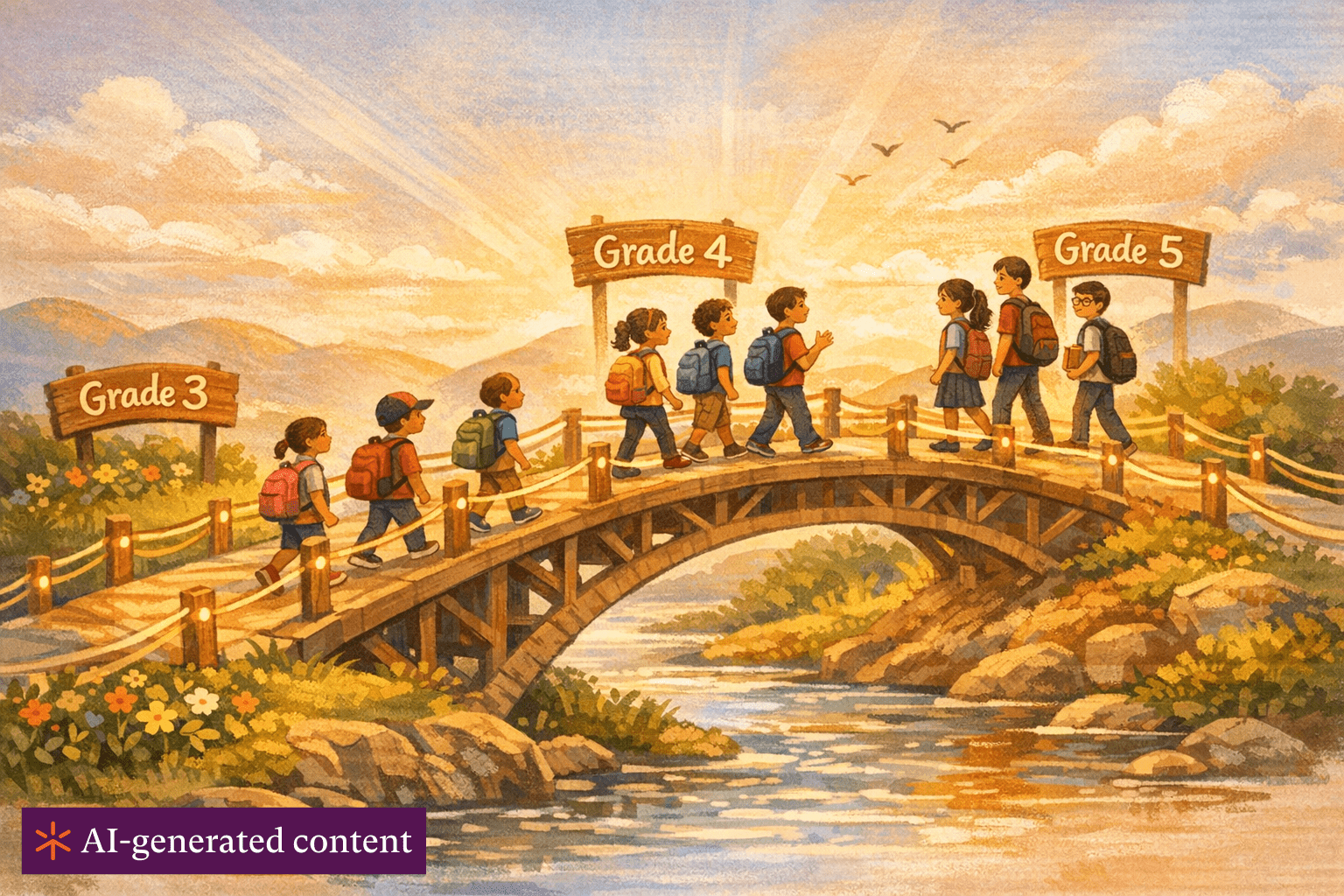
Four years. That’s how long I’ve been thinking about the gap between Grade 3 and Grade 5 in our school. Not in an obsessive way, but in that persistent, background-hum kind of way that good teachers develop when something doesn’t quite sit right. I’d notice students arriving in my Grade 4 classroom with certain skills and strategies, only to see them struggle the following year with expectations that felt suddenly steep. Or I’d watch my students master something beautifully, only to wonder if they were truly ready for what came next.
When I learned about Cohort 21 and the opportunity to pursue a How Might We question, I knew exactly what I wanted to explore: “How might we bridge the gap between grade 3 and grade 5 by tailoring the grade 4 program to complement both?”
This question felt urgent and personal. It aligned with our school’s mission to ensure every child experiences success, and I realized that success in Grade 4 isn’t just about what happens within our four walls—it’s about intentionally preparing students for the next level while honoring where they’re coming from. But I didn’t have a clear roadmap. I had intuition and questions, which, it turns out, is exactly where the best learning begins.

Starting with Conversations: The Power of Asking
My first instinct was to stop wondering in isolation and start asking. I scheduled meetings with my Grade 3 and Grade 5 colleagues, and I approached these conversations with genuine curiosity rather than assumptions.
With the Grade 3 team, I asked: What foundational skills and strategies are you prioritizing? What do you need Grade 4 to build upon? The conversation revealed something I hadn’t fully appreciated before—the intentionality of their scaffolding work. They were deliberately building stamina, teaching specific strategies for decoding and comprehension, and creating classroom cultures where risk-taking felt safe. They weren’t just “preparing” for Grade 4; they were doing the essential work that makes everything that follows possible.
Then I sat with the Grade 5 teachers. What are the biggest shifts you notice when students arrive? Where do they struggle most? This conversation proved to be the most eye-opening of all. Grade 5 teachers shared something that surprised me: they had a significant dependency on students having access to laptops and digital tools. More than I’d realized. But beyond that, they expressed concern about gaps in foundational skills—particularly around independent work habits, explicit understanding of expectations, and the ability to sustain focus on complex tasks.
One Grade 5 teacher said something I won’t forget: “By the time they get to us, they need to understand that learning is their responsibility.” It was a gentle but clear statement about the shift in agency and independence that Grade 5 demands.
Identifying the Specifics: Where the Real Work Lives
These conversations gave me concrete areas to focus on. Two needs emerged as particularly important:
- Google Docs Readiness: Grade 5’s reliance on digital literacy meant my students needed to arrive with genuine competency in using Google Docs—not just basic familiarity, but comfort and independence. This wasn’t something I could assume or rush through.
- Intentional Scaffolding from Grade 3: I needed to understand and build upon the specific strategies Grade 3 was teaching so that Grade 4 felt like a natural progression, not a restart or a random collection of activities.
With this clarity, I designed two key initiatives for my classroom:
Personal Word Books: Building Independence and Ownership
I introduced personal word books as a tool for students to independently track and own their learning around vocabulary and strategies. This wasn’t a teacher-created list; students selected words they encountered, words they wanted to use, words that surprised them. The act of choosing and organizing became a form of metacognition. They were learning to notice their own learning, which felt like a foundational skill for Grade 5’s expectation that learning becomes their responsibility.
Intentional Google Docs Lessons and Classroom Observations
Rather than assuming students would pick up Google Docs skills incidentally, I built explicit, scaffolded lessons into our writing instruction. I also began conducting classroom observations—watching how students navigated the tool, where they got stuck, what questions they asked. These observations became data that informed my teaching in real time.
What I Discovered: Learning Beyond the Lesson Plans
As I engaged in this work, insights began to emerge that shifted my thinking in fundamental ways.
The Laptop Dependency Was Real—And Revealing
Understanding that Grade 5 relies heavily on digital tools wasn’t just about teaching students to use Google Docs. It made me realize that digital literacy is a foundational skill for Grade 5 success, not an add-on. This meant my job wasn’t to teach it as a separate unit and check it off; it meant weaving it throughout our work so that by June, my students could navigate digital spaces with confidence and independence.
Explicit Expectations Change Everything
I noticed something I should have seen earlier: students don’t automatically know what we expect. When I was more deliberate about naming expectations—not just for academic tasks but for how we approach learning—behavior and engagement shifted. Grade 5 teachers had mentioned that students need to understand their role in their own learning. I realized that Grade 4 is where we can intentionally teach this understanding, not assume it exists.
Intentional Grade-Level Differences Matter
One of my biggest realizations was about what not to do. I don’t need to make Grade 4 into “Grade 5 lite.” Instead, I need to understand what Grade 4’s unique role is—the specific skills, dispositions, and understandings that make Grade 5 possible, while honoring the developmental needs of 9 and 10-year-olds. This is different from lowering standards; it’s about being intentional about progression.
Supporting Struggling Students Without Lowering Standards
As I worked with students on these new skills and expectations, I grappled with a tension: How do I support students who are behind without lowering the bar? What I discovered is that scaffolding isn’t the same as lowering standards. When I was more explicit about the steps, more frequent with check-ins, and more intentional about building in success experiences, students rose to the challenge. The bar stayed high; the support increased.
Post-COVID Expectations Have Eroded—And We Need to Rebuild
A sobering insight emerged as I worked with students: many of the foundational expectations around independence, focus, and academic stamina seem to have eroded over the past few years. Students aren’t lacking ability; they’re lacking practice and habit. This meant my role in Grade 4 was partly about rebuilding these expectations with patience and consistency, not judgment. It’s a multi-year project, not something that happens in one grade level.
Early Foundation-Building Pays Dividends
Watching my Grade 3 colleagues work reinforced something I intellectually knew but hadn’t fully internalized: the foundation they build matters enormously. When I understood what they were doing and why, I could build upon it rather than restart. And when I do my job well in Grade 4, I’m not just helping my students this year—I’m making Grade 5 possible.
The Biggest Shift: From Isolated Thinking to Continuum Thinking
If I had to name the most significant change in my thinking, it’s this: I’ve moved from seeing Grade 4 as an isolated classroom to seeing it as part of a continuum.
Before this work, I thought about Grade 4 curriculum in Grade 4 terms. I asked, “What do my students need to know and be able to do in Grade 4?” which is important. But I wasn’t asking the equally important question: “What role does Grade 4 play in the bigger picture of a student’s learning journey?”
Now I understand that Grade 4 is transformative. It’s where students begin to take ownership of their learning in a new way. It’s where they develop the digital literacy and academic independence that Grade 5 requires. It’s where we intentionally build upon the scaffolding of Grade 3 and prepare for the increased expectations of Grade 5. Grade 4 isn’t a waystation between two other grades; it’s a critical, intentional bridge.
And my role as a Grade 4 teacher isn’t just to teach Grade 4 curriculum. It’s to be intentional about preparing students for what comes next while honoring where they’re coming from. That’s a different kind of responsibility than I was carrying before.
The Questions That Remain
This journey has satisfied some of my curiosity, but it’s also opened new questions that I’m excited to explore:
- What do the day-to-day differences look like between Grade 3 and Grade 4 instruction? How do I help students navigate that shift?
- How can I continue to observe and learn from what’s actually happening in classrooms, not just what we intend to happen?
- What would it look like to extend this alignment work to Grade 2 and Grade 6? Is there a thread that runs through the entire upper elementary experience?
I recognize that this work is not complete. It’s a beginning, and it will likely take years to fully realize. But I’m no longer wondering in isolation. I’m asking, listening, and staying curious—and that changes everything.
What Cohort 21 Made Possible
I want to name something important: I’ve been thinking about this question for four years. Four years. And I didn’t move forward because I didn’t have protected time and space to think deeply and act intentionally. Cohort 21 gave me that. It gave me permission to prioritize something I cared about, support to think it through, and structure to actually do something about it.
In our work lives, we often feel like we’re moving from one thing to the next without the luxury of deep, sustained thinking. Cohort 21 disrupted that pattern for me. It said: Your questions matter. Your growth matters. Your students deserve a teacher who has thought carefully about their role in the bigger picture.
A Vision of Alignment
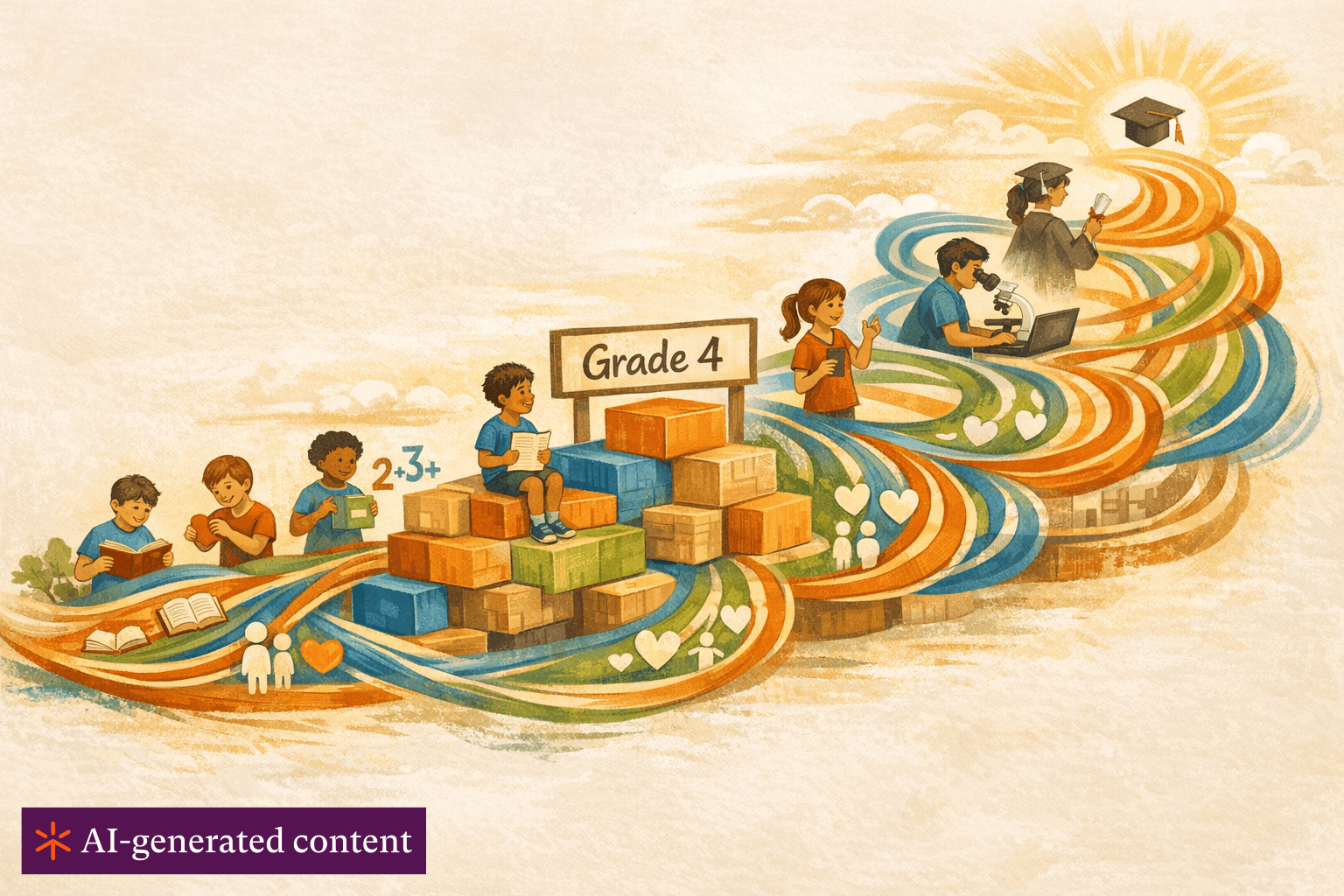
I started this journey thinking about a gap. But what I’ve discovered is that the gap isn’t really a gap—it’s an opportunity. Right now, Grade 3, Grade 4, and Grade 5 can feel like islands: separate classrooms, separate curricula, separate expectations. My vision is different. I imagine a through-line in language arts and math. I imagine students experiencing intentional progression, where skills build and deepen, where expectations increase gradually and deliberately, where each grade level knows its role in the bigger picture.
I imagine Grade 4 as the bridge it’s meant to be—not a gap, but a purposeful connection.
That work is just beginning. But I’m not wondering about it anymore. I’m doing it. And I’m inviting my colleagues to do it with me.
What About You?
If you’re a teacher reading this, I’m curious: What gap have you been wondering about? What question has been sitting in the background of your thinking, waiting for the right moment and the right support to explore? My invitation is to start where I started—with conversations, with genuine curiosity, with a willingness to listen. You might be surprised by what you discover about your role in your students’ bigger learning journey.
And if you’re an administrator or instructional leader, consider this: What would it look like to give teachers protected time to think deeply about these kinds of questions? The return on that investment, I can tell you from experience, is significant.
The gap between grades doesn’t close itself. It closes when teachers get curious, ask questions, listen carefully, and commit to intentional alignment. I’m grateful for the opportunity to do that work. And I’m just getting started.